4월 12일 현지 파키스탄 시각.
이란과 미국의 1차 휴전 협상은 결렬되었다. (밴스 vs 갈리바프)
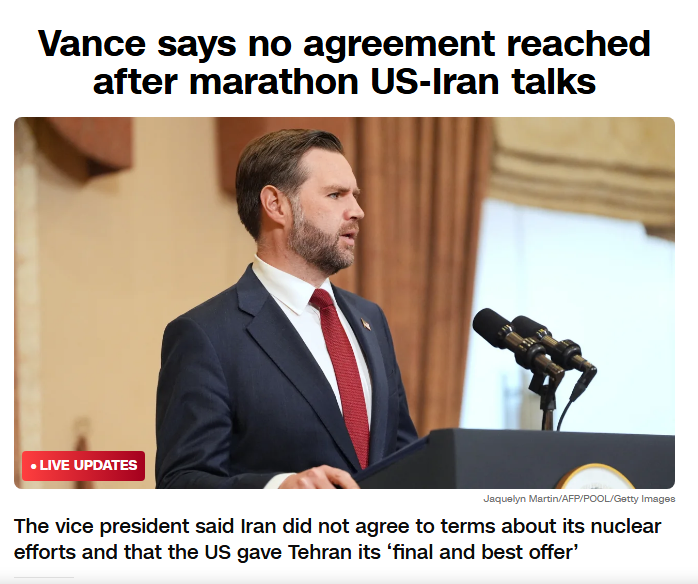
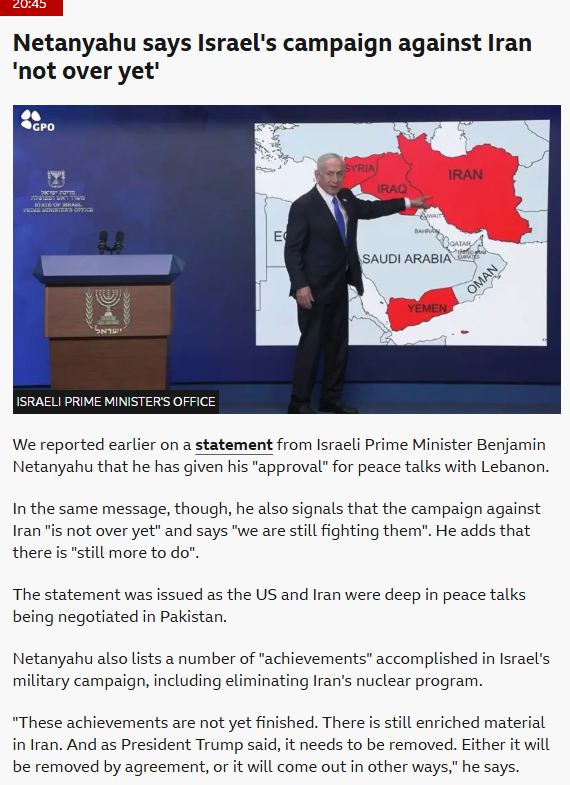
밴스 주장 -- 미국의 주장은 ‘이란 핵무기 금지’인데, 이란이 수용하지 않았다. 그래서 1차 협상은 결렬되었고, 밴스는 파키스탄을 떠나 미국으로 돌아갔다. 제 2차 협상을 할 것인가에 대해서 다시 논의할 것으로 보인다. 이스라엘은 레바논과 이란동맹세력과 전쟁을 지속할 것이다.
[해석] 이란과 미국 ‘단어 사용’ 자체가 다르다. 이란은 ‘핵 주권’ 강조하고, 미국은 ‘이란의 핵무기’를 강조한다. 현재 이란은 핵무기가 없다. 핵무기 실험한 적도 없다.
트럼프와 6차례 전화 통화를 한 밴스 말의 핵심은 무엇인가? 미국은 이번 전쟁의 ‘승리’의 증거로, ‘이란 핵무장 포기’를 선전하고 싶어함을 알 수 있다. 그런데 이란은 ‘농축 우라늄 주권’을 고수하고 있다.
2. 1차 이란과 미국의 휴전 협상 결렬 원인 추측.
1차 이란-미국 휴전 (종전) 협상 결렬의 원인들을 추측해보면, 미국은 미국측의 ‘요구사항들 15개’를 이란이 수용하면, ‘경제 제재, UN 경제 제재’를 해제하겠다는 것을 가장 주요하게 내걸었을 것으로 보인다. 이에 대해 이란이 전체적으로 미국안을 거부했을 가능성이 크다.
(1) 이란의 요구 사항인, ‘포괄적인 휴전 (이후 정전)’을 미국측이 보장하지 않았다. 이란은 ‘미국과 이란’만의 휴전이나 정전이 아니라, 이스라엘과 이란의 ‘저항의 축(팔레스타인 가자의 하마스, 예멘의 ‘후티’, 이라크 시아파 민병대, 레바논 헤즈볼라 당)’과의 휴전과 불가침을 요구하고 있다.
1차 회담에서 미국은 이란의 ‘포괄적인 휴전’안을 수용하거나 보증해주지 않은 것으로 추측함.
자세한 것은 언론보도가 나와봐야 알 수 있을 것 같다.
(2) 농축 우라늄과 향후 실험 범위에 대한 이견이 크다. 미국은 ‘이란의 핵무장’ 포기 증서를 이번 승리 전리품으로 챙기고 싶어한다. 그러나 1차 협상에서는 이란이 ‘핵 물질 주권’을 강하게 내세워 협상이 결렬된 것으로 보인다.
(3) 호르무즈 해협 통제권을 이란이 계속해서 주장할 것인가? 나는 장기적으로 이란은 인공물인 ‘운하’가 아니라, 자연물은 ‘해협’ 통제권을 발동하는 것 대신, 유럽, 아시아 통상 국가들과의 협상을 통해 이란에 대한 경제 제재 해제 요구 쪽으로 방향을 틀 것으로 보고 있다.
미국과 이스라엘과의 전쟁 기간에는 이란은 ‘국제적 원유가’ 상승을 비대칭적 군사전술로 지속적으로 사용할 것이다.
이번 휴전 협상에서 호르무즈 해협 문제는 상대적으로 쉬운 협상 주제이다.
(4) 미국과 이스라엘의 최대치 요구인 ‘이란의 탄도미사일’ 보유 숫자와 범위에 대해서, 가장 이견이 컸을 것이다. 이란은 이스라엘이 레바논(헤즈볼라)과 이란을 폭격의 사례를 들어, 군사주권을 포기할 수 없다고 말했을 것이다.
관련 글. 이란의 '종전' 조건들.
https://futureplan.tistory.com/497437
이란과 미국(이스라엘) 전쟁. 종전 협상. 이란 요구사항. 불가침 보장, 수출대금 본국회수, 호르
1. 알 자지라 뉴스 보도 - 이란의 종전 협상 조건들 이란 주장 1) 휴전 뿐만 아니라 2) 전쟁 이후 질서 (전쟁 억지력, 장기 경제활동과 안보 보장) 이란 정치-군장성들 말 (누구인지 모름) 1) 이란이
futureplan.tistory.com
미국이 내세운 이란과의 휴전 조건들. 15가지.
https://futureplan.tistory.com/497425
이란과 미국(이스라엘) 전쟁. 미국의 이란과의 ‘종전 협상 15조항’ 특성과 한계, 향후 협상 전
미국의 이란과의 ‘종전 협상 15조항’ 특질과 한계, 향후 협상 전망.(3월 25일) 1.이란이 즉각적 수용할 것인가? 이란이 즉각적으로 수용하지 않을 것이다. 그 이유는 ‘15조항’에는 강경파와 외
futureplan.tistory.com
update, guardian,
JD Vance says US delegation leaving Pakistan after failing to reach deal with Iran
US vice president cited shortcomings in the talks, saying Iran had chosen not to accept American terms, including to not build nuclear weapons
Guardian staff and agencies
Sun 12 Apr 2026 03.13 BST
Share
Prefer the Guardian on Google
US vice president JD Vance said on Sunday that his negotiating team was leaving Pakistan after not reaching a deal with Iran after a marathon 21 hours of negotiations.
Vance cited shortcomings in the talks and said Iran had chosen not to accept American terms, including to not build nuclear weapons.
“The bad news is that we have not reached an agreement, and I think that’s bad news for Iran much more than it’s bad news for the United States of America,” Vance said.
“So we go back to the United States having not come to an agreement. We’ve made very clear what our red lines are.“
Vance said he has spoken with US president Donald Trump half a dozen times during the talks.
man in red and cream robe speaks into microphone while holding papers in church
Pope says ‘enough of war’ and decries ‘delusion of omnipotence’ at peace vigil
Read more
The talks in Islamabad were the first direct US-Iranian meeting in more than a decade and the highest-level discussions since the 1979 Islamic Revolution. The outcome could determine the fate of the fragile two-week ceasefire and the reopening of the strait of Hormuz, a choke point for about 20% of global energy supplies that Iran has blocked since the war began. The conflict has sent global oil prices soaring and killed thousands of people.
In a post on X, Iran’s government said that the talks had concluded and technical experts from both sides would exchange documents.
“Negotiations will continue despite some remaining differences,” the post added, though it did not say when they would restart.
Vance, special envoy Steve Witkoff and Trump’s son-in-law Jared Kushner met Iranian parliamentary speaker Mohammad Baqer Qalibaf and foreign minister Abbas Araqchi for two hours before a rest, according to a source from mediator Pakistan.
The Iranian delegation arrived on Friday dressed in black in mourning for late supreme leader Ayatollah Ali Khamenei and others killed in the war. They carried shoes and bags of some students killed during the US bombing of a school next to a military compound, the Iranian government said. The Pentagon has said the strike is under investigation but Reuters has reported that military investigators believe the US was likely responsible for it.
“There were mood swings from the two sides and the temperature went up and down during the meeting,” another Pakistani source said in reference to the first round of talks.
For the US-Iran talks, Islamabad, a city of more than 2 million people, was locked down with thousands of paramilitary personnel and army troops on the streets. Pakistan’s mediating role is a remarkable transformation for a nation that was a diplomatic outcast a year ago.
As the talks started, the US military said it was “setting the conditions” to start clearing the strait of Hormuz.
The strategic waterway is central to the ceasefire talks. The US military said two of its warships had passed through the strait and conditions were being set to clear mines, while Iran’s state media denied any US ships had transited through it.
Before the talks began, a senior Iranian source told Reuters the US had agreed to release frozen assets in Qatar and other foreign banks. A US official denied agreeing to release the money.
As well as the release of assets abroad, Tehran is demanding control of the strait of Hormuz, payment of war reparations and a ceasefire across the region including in Lebanon, according to Iranian state TV and officials.
Tehran also wants to collect transit fees in the strait of Hormuz.
Trump’s stated goals have shifted, but as a minimum he wants free passage for global shipping through the strait and the crippling of Iran’s nuclear enrichment programme to ensure it cannot produce an atomic bomb.
https://www.theguardian.com/world/2026/apr/12/jd-vance-says-no-deal-us-iran-pakistan-talks-islamabad


