이란-미국(이스라엘)전쟁 march 23. 트럼프, 호르무즈 해협 봉쇄해제하지 않으면, 이란 에너지 발전소 완전 파괴하겠다, vs 이란 보복 타격하겠다. 설전.
Trump gives Iran 48-hour ultimatum over Strait of Hormuz
Tehran warned in reply that any strike on its energy plants would prompt retaliatory attacks on U.S. and Israeli energy and infrastructure facilities.
Copy Link
Isfahan Oil and Gas Refinery Company in Iran
The Isfahan refinery in Isfahan, Iran is pictured on Nov. 8, 2023. | Fatemeh Bahrami/Anadolu via Getty Images
March 22, 2026 8:35 am CET
By Jones Hayden
U.S. President Donald Trump warned late Saturday that the United States will “obliterate” energy plants in Iran if the government in Tehran doesn't fully open the Strait of Hormuz, giving the country a 48-hour deadline to comply.
"If Iran doesn’t fully open, without threat, the Strait of Hormuz, within 48 hours from this exact point in time, the United States of America will hit and obliterate their various power plants, starting with the biggest one first," Trump said in a post on Trust Social.
Tehran warned in reply that any strike on its energy plants would prompt retaliatory attacks on U.S. and Israeli energy and infrastructure facilities, while Iran’s Islamic Revolutionary Guard Corps (IRGC) said such a U.S. attack would bring the complete closure of the vital shipping channel.
"If Iran's fuel and energy infrastructure is attacked by the enemy, all infrastructure of energy, information technology, and desalination facilities" in the region belonging to the U.S. and Israel "will be targeted," spokesperson for the Khatam al-Anbia Central Headquarters of Iran warned in a statement carried by the Tasnim news agency Sunday morning.
Mohammad Bagher Ghalibaf, speaker of Iran's parliament, said that in retaliatory strikes, "critical infrastructure and energy and oil infrastructure throughout the region will be considered legitimate targets and irreversibly destroyed, and oil prices will rise for a long time."
Iran's Revolutionary Guards said in a statement: "The Strait of Hormuz will be completely closed and will not be opened until our destroyed power plants are rebuilt."
The warnings of escalation in the Mideast conflict come after the British government on Saturday confirmed that Tehran launched an unsuccessful attack on Diego Garcia, a joint U.S.-U.K. military base in the Indian Ocean. Iran’s semiofficial Mehr news agency said Tehran fired two intermediate-range ballistic missiles at the base in the Chagos Islands.
Neither missile hit the base, Mehr added. One missile failed to reach the island, while another was shot down by a U.S. warship, according to separate media reports.
It was the longest-range attack yet by Iran since the U.S. and Israeli strikes on the country started in late February. Israel claimed that Iran has missiles with a range of about 4,000 kilometers, capable of hitting the capitals of Britain, France and Germany, as well as the Chagos Islands. "The Iranian terrorist regime poses a global threat. Now, with missiles that can reach London, Paris or Berlin," the Israel Defense Forces said in a post on X.
Britain said Sunday morning that it is ready to defend itself against a potential Iranian missile assault on London. U.K. Communities Secretary Steve Reed told BBC One’s Sunday with Laura Kuenssberg that there "is no specific assessment that the Iranians are targeting the U.K."
“I’m not aware of any assessment at all that they are even trying to target Europe, let alone that they could if they tried," Reed said. "But even if they did, we have the necessary military capability to defend this country.”
Iran's targeting of the base on Diego Garcia occurred before Britain on Friday confirmed that U.S. use of its bases can involve defensive operations against "missile sites and capabilities being used to attack ships in the Strait of Hormuz," a permission that includes the Indian Ocean island.
Trump's ultimatum to Tehran over Hormuz came a day after the U.S. president broached "winding down" American military operations in the region and suggested the responsibility for policing the strait would fall to other countries. The Pentagon, meanwhile, was sending thousands more Marines and additional warships to the Middle East, according to media reports.
2.
Trump tells Iran it has 48 hours to open Hormuz or US will ‘obliterate’ its power plants
US president threatens to take out Iranian energy facilities – ‘starting with the biggest one first’ – if Tehran does not reopen the strait
Middle East crisis live – latest updates
Guardian staff and agencies
Sun 22 Mar 2026 05.12 GMT
Share
Prefer the Guardian on Google
Donald Trump has given Iran 48 hours to reopen the strait of Hormuz to shipping or face the destruction of its energy infrastructure, as Tehran launched its most destructive attack yet on Israel.
The ultimatum, made just a day after the US president said he was considering “winding down” military operations after three weeks of war, came as the key oil passage remained effectively closed and thousands more US Marines headed to the Middle East.
Trump wrote on Truth Social that the US would “hit and obliterate” Iranian power plants – “starting with the biggest one first” – if Tehran did not fully reopen the strait within 48 hours, or 23:44 GMT on Monday according to the time of his post.
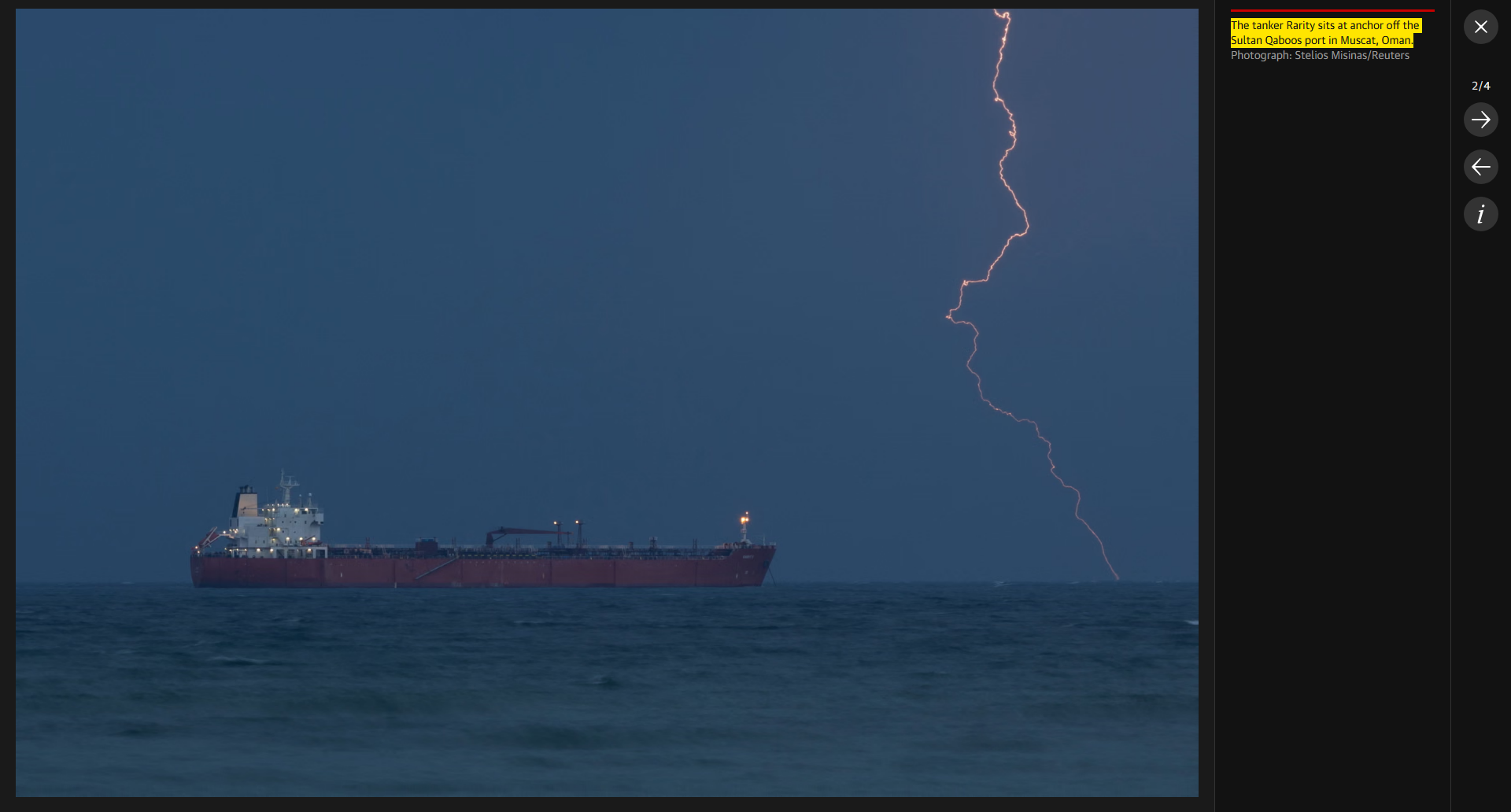
A red oil tanker with a flash of lightning behind it
View image in fullscreen
The tanker Rarity sits at anchor off the Sultan Qaboos port in Muscat, Oman. Photograph: Stelios Misinas/Reuters
Iran’s foreign minister, Abbas Araghchi, said Tehran had imposed restrictions only on vessels from countries involved in attacks against Iran, and would assist others that stayed out of the conflict.
In response to Trump’s threat, Iran’s army said it will target energy and desalination infrastructure “belonging to the US and the regime in the region,” according to the Fars news agency.
Trump’s ultimatum came hours after two Iranian missiles struck southern Israel, injuring more than 100 people in the most destructive attack since the war began. The Israel prime minister, Benjamin Netanyahu, vowed to retaliate “on all fronts”.
The strikes, which slipped through Israel’s missile defence systems, tore open the facades of residential buildings and carved craters into the ground.
First responders said 84 people were injured in the town of Arad, 10 of them seriously. Hours earlier, 33 were wounded in nearby Dimona, where AFPTV footage showed a large hole gouged into the ground next to piles of rubble and twisted metal.
Dimona hosts a facility widely believed to be the site of the Middle East’s only nuclear arsenal, although Israel has never admitted to possessing nuclear weapons.
The Israeli army told Agence France-Presse there had been a “direct missile hit on a building” in Dimona, with casualties reported at multiple sites, including a 10-year-old boy in serious condition with shrapnel wounds.
Emergency workers gather at the site of an Iranian missile strike
View image in fullscreen
Emergency workers gather in the early hours at the site of an Iranian missile strike in Arad, Israel. Photograph: Erik Marmor/Getty Images
Netanyahu vowed to continue striking Iran. Hours later, the Israeli military said its forces had launched a wave of strikes on Tehran.
Iran said the targeting of Dimona was retaliation for Israeli strikes on its Natanz nuclear facility, with the Islamic Revolutionary Guard Corps (IRGC) saying forces also targeted other southern Israeli towns as well as military sites in Kuwait and the UAE.
After the Natanz attack, the UN nuclear watchdog chief, Rafael Grossi, reiterated his call for “military restraint to avoid any risk of a nuclear accident”.
The Natanz facility hosts underground centrifuges used to enrich uranium for Iran’s disputed nuclear programme; it sustained damage in the June 2025 war.
The Israeli military denied it was behind the Natanz strike, but said it had struck a facility at a Tehran university that it claimed was being used to develop nuclear weapon components for Iran’s ballistic missile programme.
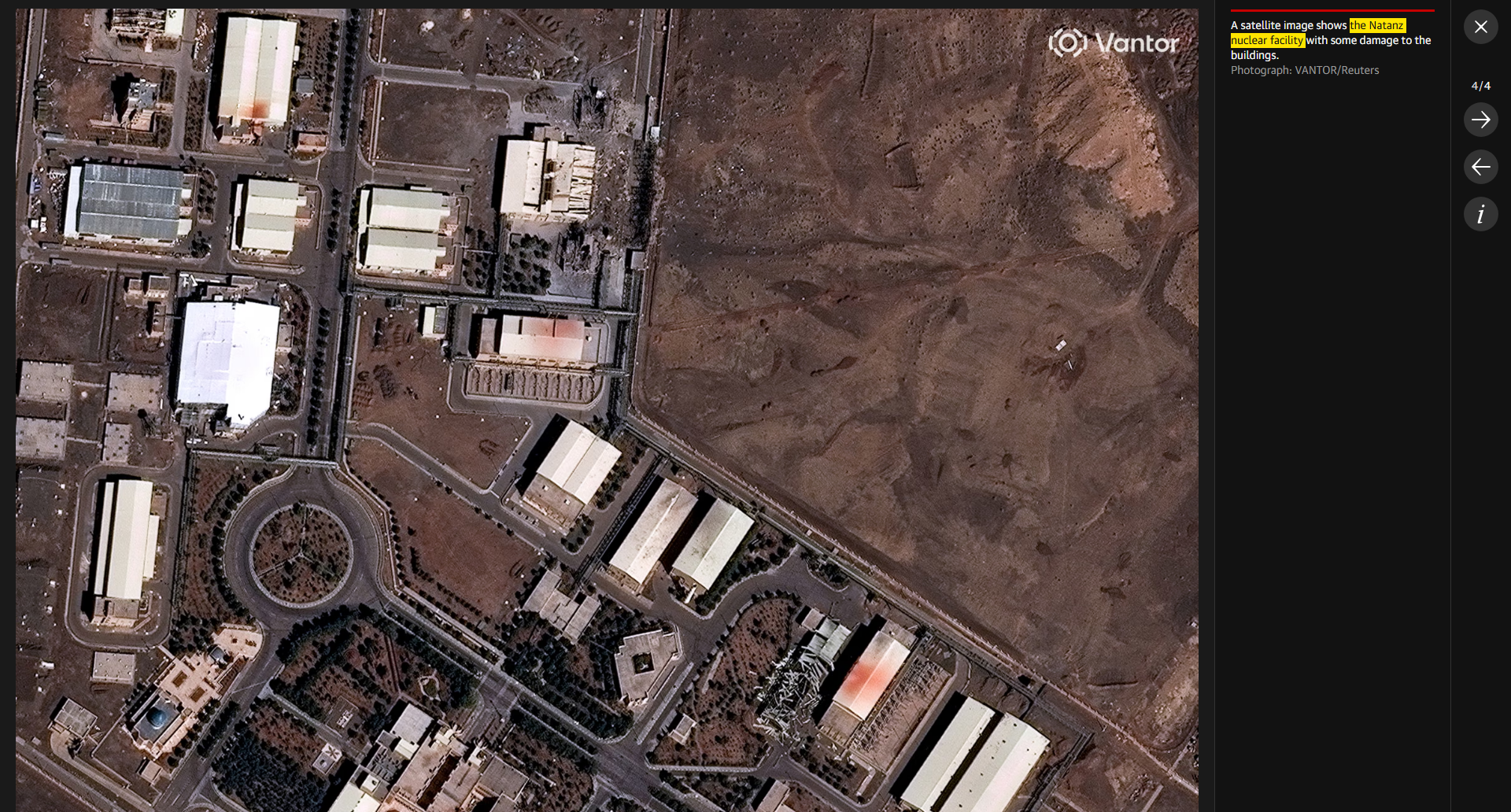
A satellite image shows the Natanz nuclear facility with some building damage
View image in fullscreen
A satellite image shows the Natanz nuclear facility with some damage to the buildings. Photograph: VANTOR/Reuters
The United Arab Emirates said on Saturday it faced aerial attacks after Iran warned it against allowing strikes from its territory on disputed islands near the strait of Hormuz.
Iran has choked the vital waterway, which carries a fifth of global crude oil trade in peacetime.
The standoff has sent crude oil prices soaring, with North Sea Brent crude now trading above $105 a barrel, as long-term consequences for the global economy become an acute concern.
The Guardian view on the Iran war escalation: as Trump breaks things, who will pick up the pieces?
Read more
A joint statement from the leaders of several countries – including the UK, France, Italy, Germany, South Korea, Australia, the UAE and Bahrain – condemned the “de facto closure of the strait of Hormuz by Iranian forces”.
“We express our readiness to contribute to appropriate efforts to ensure safe passage through the Strait,” they said.
Trump has slammed Nato allies as “cowards” and urged them to secure the strait.
On Sunday, Japan said it could consider deploying its military for minesweeping in the strait of Hormuz, if a ceasefire is reached.
The foreign minister, Toshimitsu Motegi, said: “If there were to be a complete ceasefire, hypothetically speaking, then things like minesweeping could come up.
“This is purely hypothetical, but if a ceasefire were established and naval mines were creating an obstacle, then I think that would be something to consider,” Motegi said on Japanese TV.
Japan’s military actions are limited under its postwar pacifist constitution, but 2015 security legislation allows Japan to use its self-defence forces overseas if an attack, including on a close security partner, threatens Japan’s survival and no other means are available to address it.
Japan gets about 90% of its oil shipments via the strait, which Tehran has largely closed during the war, now in its fourth week
With Reuters and Agence France-Presse