1. 아야톨라 하메네이의 후계자 후보들
그의 둘째 아들 모즈타바 하메네이와 1979년 호메이니의 손자 하산 호메이니이다.
모즈타바는 '이슬람 혁명 수비대'의 권력을 장악하고 있어 유력한 최고지도자 후보이다. 그러나 부자세습에 대한 부정적 여론이 많다고 것을 알고 있는 그는 부자 세습을 하지 않겠다는 의사를 표명했다.
관건은 부자세습에 대한 부정적 여론을 수용하느냐, 아니면 '이슬람 혁명 수비대'의 지원을 받아 모즈타바가 '최고지도자'가 되느냐로 보인다.
또 한 명의 후보는 호메이니의 손자, 하산 호메이니이다. 그는 온건 개혁파로 알려져 있고, 이란의 통합적 상징적 최고지도자 후보로 보인다. 그런데 2016년에 하산이 '전문가 위원회'직에 도전했으나, 낙방한 경험이 있는 것을 보면, 내부 견제세력이 많다는 것을 알 수 있다.
모즈타바 하메네이,하산 호메이니 이외에, 전문가 위원회 소속 , 알리레자 아라피 Alireza Arafi , 미르바게리 Mohammad Mehdi Mirbagheri,대법원장 모세니-에제이 (Gholam-Hossein Mohseni-Ejei)
2. 현재 이란의 실권자들, 알리 라리자니 (67세), 갈리바프(64세) 로 알려져 있다. (2월 22일자 뉴욕타임즈 보도 요약)
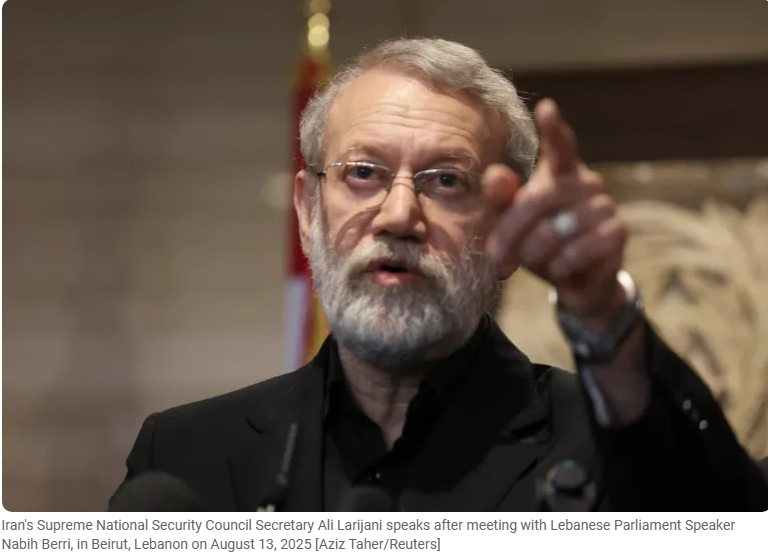
(1) 하네메이가 죽기 전, 제 1 실권자로 지명했다고 알려진 라라자니. 현재 미국과 협상 책임자, 전략가임.
직책 국가안보최고회의 사무총장 (SNSC). 의사출신 대통령 페제쉬키안에 비해 실권 장악. 이번 이란 시위대 진압 책임자.
칸트 철학 전공자,수학자라는 이색적인 경력, 성직자 집안 출신.
(*뉴욕 타임즈 보도) 정부 내 이견을 억제시키고, 러시아, 카타르, 오만과 동맹 형성, 미국과 핵협상 당사자임.
28일 미국 이스라엘의 전쟁 이전에, 카타르 도하에서, 2025년 6월 미국 (이스라엘)과 이란과의 10일 전쟁에서 발견한 이란의 약점을 이제 보완했고, 미국이 침략하면 응수할 준비 완수 발표 (2월)
알리 라리자니 (ALi Larijani) 는 하메네이가 가장 신뢰했던 전략가임. 하메네이 사망 전까지 '국가 전시' 상황 사령탑 역할
2008-2020년까지 국회의장 역임.
2021년 에너지 , 안보, 인프라 구축을 위해, 중국과의 약 4000억 달러가 넘는 '25년 전략적 파트너십 협정' 책임자.
하메네이가 죽기 전에 '죽음'에 대비해서, 이란 정부 요직을 대체하기 위해 4개조를 준비시켰다고 함.
현재 이란을 지휘하는 제 1조는 알리 라리자니(전략,외교)-갈리바프(의회, 군사)-페제시키안(대통령,행정)이 맡고 있다.
만약 이들이 사망하면, 제 2조가 이란 정부를 지휘하게 된다.
12년간 국회 의장, 성직자 경력 계급이 낮은 편이어서, 최고지도자는 당장 되기 힘들지만, 정부 실무와 실권을 장악하고 있음.
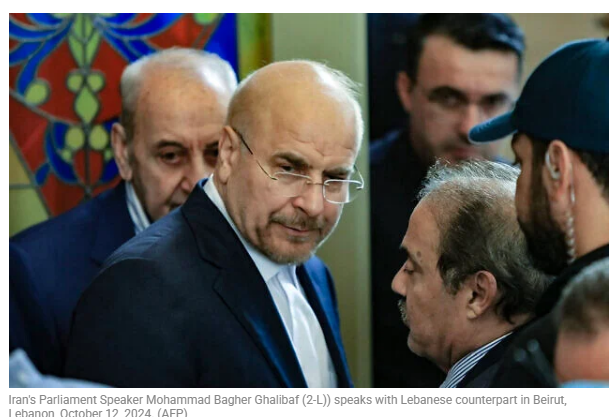
(2) 모하마드 바게르 갈리바프(Mohammad Bagher Ghalibaf) - 라라자니에 이어 제 2위 서열.
혁명수비대 출신 현 국회의장. 미국과 이스라엘에 대한 강경파. 갈리바프는 '군부'와 '국회'의 연결자임.
3. 루키아노 카카라 (카타르 걸프 대학 교수) 인터뷰.
(1) 하메네이 사후 미리 준비함. 하메네이에 대한 저격은 어느 정도 예상되었고, 현실화될 수도 있다는 것을 이란 지도부가 알았기 때문에, '하메네이의 권력 승계'는 예전부터 준비되었다.
(2) 이란 정부 인사들 제 1조, 제 2조, 제 3조, 제 4조 이런 식으로 준비
4.최고 지도자 자격 조건은 (1) 시아파 이슬람 율법에 대한 깊은 지식 (2) 정치적 판단력, 용기, 행정 실무 능력
5. 하메네이 사망 이후, 최고 지도자 선출 과정. (1) 88명으로 구성된 전문가 회의 (신학자)에서, 3분의 2 표결을 얻는 자가 최고 지도자가 된다. (2) 선출 전까지는, 대통령, 사법부 수장(대법원장에 해당), 헌법수호위원회의 성직자로 구성된 ‘임시 지도부 위원회’가 최고 지도자 임무를 수행함. 임시 위원회 3명은 다음과 같다. 페제쉬키안 (대통령), 모세니-에제이(대법원장), 아라피(헌법수호회)
참고 ( 이란 정부 권력 구조 )
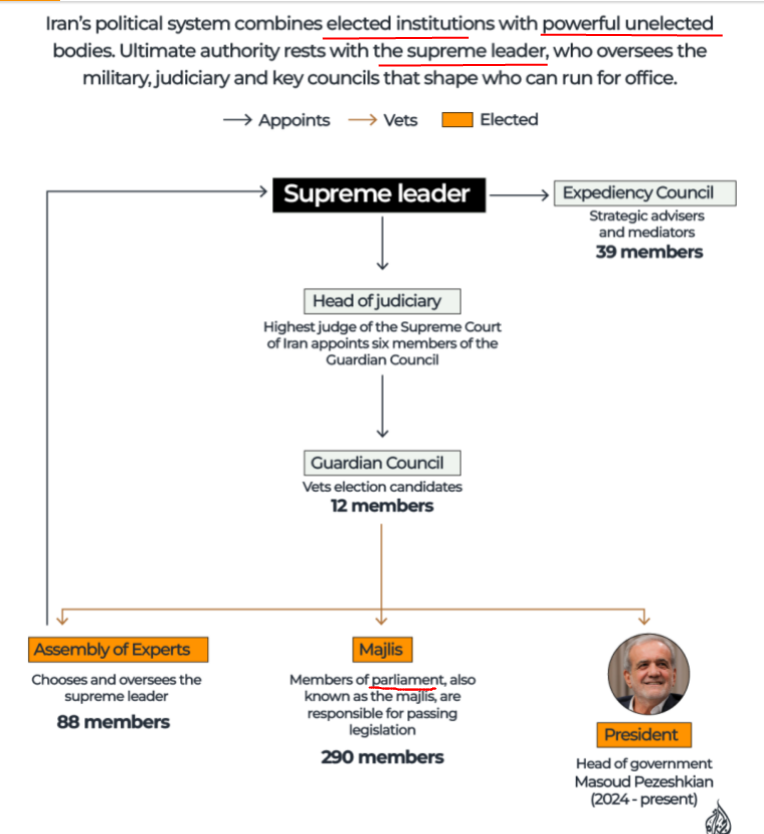
벨라야테 파키 (Velayat-e Faqih) 뜻. 이슬람 법학자가 모든 국가기구를 통해야 한다는 원리.
1. 최고 지도자 (Rahbar 라바) 신의 대리자, 국가 원수, 군통수권.
권한(혁명수비대 사령관, 사법부 수장, 관영 방송국 사장 임명. 전쟁 선포 및 평하 협정 체결권)
2. 대통령 (President) 행정부 대표. 최고지도자의 명령 따름
3. 전문가 회의 (Assembly of Experts) 88명 이슬람 신학자 (울라마)로 구성, 8년 임기. 최고 지도자를 선출, 감독, (해고도 이론적으로는 가능).
4. 헌법 수호회 (Guardian Council) 최고 지도자가 임명한 6명 성직자 + 사법부 수장이 지명한 6명 법학자.
역할 (1) 의회의 법안이 이슬람 율법과 헌법에 맞는 검토, (거부권 행사) (2) 선거 후보 자격 심사, 반체제 인사 차단
5. 사법부 수장 (대법원장) 이 헌법 수호 위원회 6명을 지명하고, 의회 (마즐리스)가 최종 선출함.
6. 이슬람 의회 (Majlis 마즈리스) 예산 심의, 법률 제정, 모든 법안은 헌법수호위원회의 승인을 받아야 함.
7. 이슬람 혁명 수비대 (IRGC – Pasdaran 파스다란) 정규군과는 별도. 최정예 군사조직. 이슬람 체제 수호가 주 임무. 경제, 정보, 외교 등에 개입.
8. 국정 조정위원회 (국가 이익 판별 Expedience Council ) 39명 자문단으로 구성. 기능은, 의회와 헌법수호위원회 사이 갈등 중재. 최고 지도자의 자문 기구. 국정조정위원회 뜻. 마즈마에 타쉬키세 마슬라하테 네잠(Majma'-e Tashkhīs-e Maslahat-e Nezām)'에서 '마슬라하트(Maslahat, 이익/편익)'를 강조한 번역어.
관련 기사.
Who could succeed Ayatollah Ali Khamenei to lead Iran?
Ayatollah Ali Khamenei’s killing brings Iran’s clerics the colossal task of picking his successor. They have only done so once, four decades ago.
Iran
Clerics walk past a wall with a poster of Iran's Supreme Leader Ayatollah Ali Khamenei, after offering their condolences following his killing in Israeli and US strikes, at the office of the supreme leader's representative in Najaf, Iraq, March 1, 2026 [Alaa al Marjani/Reuters]
By Yashraj Sharma
Published On 1 Mar 2026
1 Mar 2026
The killing of Ayatollah Ali Khamenei in US-Israeli air attacks has thrust Tehran to a pivotal crossroads as the ruling establishment looks to pick the late supreme leader’s successor.
Several senior leaders close to Khamenei were also killed in the attack, including his top security adviser Ali Shamkhani and Islamic Revolutionary Guard Corps (IRGC) commander-in-chief Mohammad Pakpour.
Tehran on Sunday targeted more sites in Gulf countries in retaliation as it vowed to avenge the killing of Khamenei. Meanwhile, United States President Donald Trump has warned against the retaliatory attacks and suggested that the strikes on Iran would continue.
The US-Israeli attacks were launched on Saturday despite several rounds of diplomatic engagement with Tehran that raised hopes of a deal on its nuclear programme.
The killing of Khamenei, who took power in 1989, has left Iran’s top leadership to prepare for the transfer of power at a time when the US, the world’s strongest military power, has pledged to dismantle the ruling structure established following Iran’s 1979 revolution.
So, who will be the next supreme leader of Iran? And how will he be chosen?
TEHRAN, IRAN - MARCH 1: A woman wails and holds a poster as thousands of people gather in Enghelab Square for a pro-government demonstration after Iranian state media confirmed the death of Ayatollah Ali Khamenei on March 1, 2026 in Tehran, Iran. Iran's Supreme Leader, Ayatollah Ali Khamenei, was confirmed killed after the United States and Israel launched a joint attack on Iran on February 28. Iran retaliated by firing waves of missiles and drones at Israel, and targeting U.S. allies in the region. (Photo by Majid Saeedi/Getty Images)
A woman wails and holds a poster as thousands of people gather in Enghelab Square for a pro-government demonstration after Iranian state media confirmed the death of Ayatollah Ali Khamenei on March 1, 2026 in Tehran, Iran [Majid Saeedi/Getty Images]
How is the supreme leader selected?
Iran’s supreme leader is selected by the Assembly of Experts, an 88-member clerical body elected by the public every eight years.
Candidates who run for the Assembly must first be vetted and approved by the Guardian Council, a powerful oversight body whose members are partly appointed by the supreme leader himself.
When the position becomes vacant, due to death or resignation, the Assembly of Experts convenes to choose a successor. A simple majority is sufficient to appoint the new supreme leader.
As per Iran’s constitution, the candidate must be a senior jurist with deep knowledge of jurisprudence in Shia Islam, as well as qualities such as political judgement, courage, and administrative capability.
Earlier, there had been only one other transfer of power in the office of the supreme leader of Iran, when Grand Ayatollah Ruhollah Khomeini, the leader of the Islamic Revolution, died at age 86 in 1989.
What happens in Iran during a leadership vacuum?
Article 111 of Iran’s constitution mandates that a temporary council handle duties until a new supreme leader is elected.
That council will include President Masoud Pezeshkian, Supreme Court Chief Justice Gholam-Hossein Mohseni-Ejei, and a cleric from the Guardian Council, according to Iranian media.
Ayatollah Alireza Arafi from the Guardian Council, 67, was on Sunday appointed to the three-member temporary council.
They will lead the country until the assembly formally picks the new supreme leader.
Iran’s security chief and a close confidante of the late Khamenei, Ali Larijani, said on Sunday that the transition process is under way.
Luciano Zaccara, a research associate professor in Gulf politics at Qatar University, told Al Jazeera that Iran’s political system has been prepared for the current situation, knowing that Khamenei’s killing was a real possibility.
“Trump wants to get the best deal possible, but the method he’s using to get that deal is to annihilate or destroy as much as he can,” Zaccara said. “This is the way to impose conditions, not to negotiate anything. Trump wants a surrender of the regime, not a change.”
To avoid a vacuum of power, the late Khamenei kept replacements for all the officials eliminated in the last few months ready, and made sure to put in a structure, Zaccara told Al Jazeera.
“The structures remain, the line of power [and] the line of command remain in place,” he said.
Who is the supreme leader of Iran?
The supreme leader is the top position in the Islamic Republic’s political and religious hierarchy under the velayat-e faqih system – the principle of the guardianship of the Islamic jurist.
He is essentially the commander-in-chief of the armed forces and the final word in the country – and appoints key judicial, military, and media officials. He also leads the mighty IRGC.
Here are the contenders for the top job in Tehran
iran
Mojtaba Khamenei (left), the second son of Iran’s Supreme Leader Ayatollah Ali Khamenei, visits Hezbollah’s office in Tehran, Iran, October 1, 2024 [Handout/Office of the Iranian Supreme Leader/West Asia News Agency via Reuters]
Mojtaba Khamenei
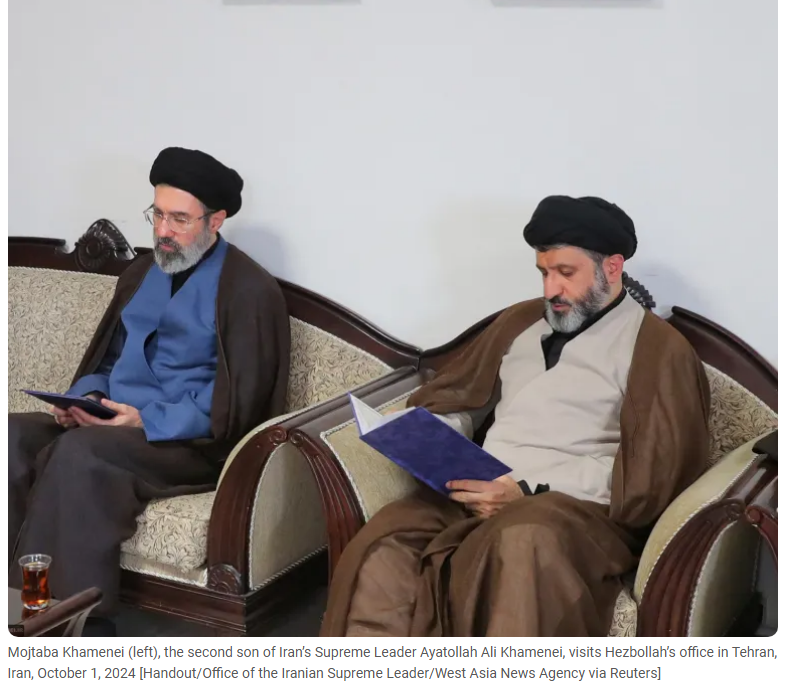
왼쪽 (모즈타바 하메네이) 하메네이의 둘째 아들
Khamenei’s second son, Mojtaba Khamenei, is among the top contenders to succeed his father as the next supreme leader.
He is known to wield significant influence among the administrators and the IRGC, the most powerful military body.
However, Khamenei’s lineage is also among the biggest barriers he faces. He was reportedly opposed to the father-to-son succession. It is frowned upon in Iran, particularly after the US-backed monarchy of Shah Mohammad Reza Pahlavi was toppled in 1979.
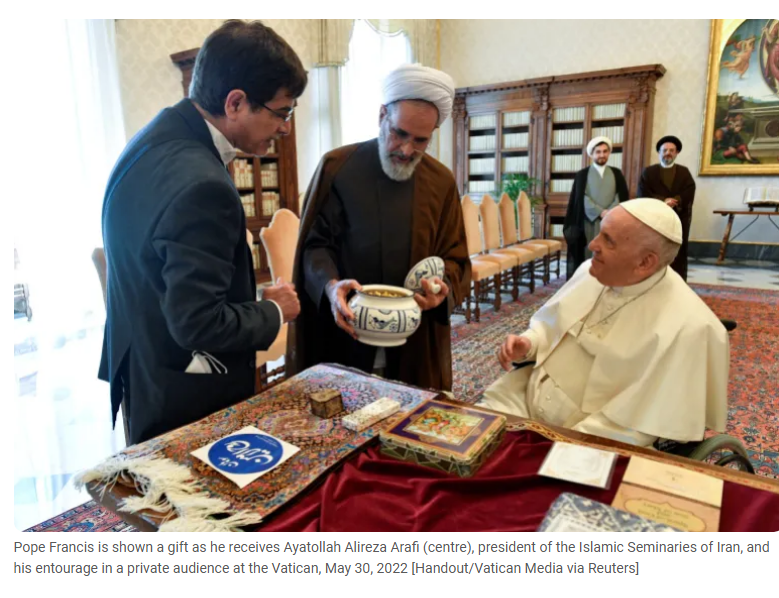
Pope Francis is shown a gift as he receives Ayatollah Alireza Arafi (centre), president of the Islamic Seminaries of Iran, and his entourage in a private audience at the Vatican, May 30, 2022 [Handout/Vatican Media via Reuters]
알리레자 아라피 Alireza Arafi
Arafi, a 67-year-old cleric, is an influential figure in the Islamic Republic’s religious establishment, but not a widely accepted political actor.
He serves as the deputy chairman of the Assembly of Experts, the body responsible for overseeing the selection of the supreme leader, and has been a member of the Guardian Council, which vets election candidates and laws passed by parliament.
Arafi was appointed as the jurist member of Iran’s Leadership Council, the body tasked with fulfilling the supreme leader’s role until the Assembly of Experts elects a new leader, Iran’s state media reported on Sunday.
He is also the Friday prayer leader of Qom – Iran’s most important religious centre – and heads the country’s seminary system, overseeing clerical education nationwide.
Mohammad Mehdi Mirbagheri
Mirbagheri is an ultra-hardline clerical voice in the establishment and a member of the Assembly of Experts.
He is widely known for his world view critical of the West – and currently heads the Islamic Sciences Academy in the northern city of Qom.
Gholam-Hossein Mohseni-Ejei
Mohseni-Ejei is a senior Iranian cleric and currently heads the judiciary of the Islamic Republic, appointed to the role in July 2021 by the late Khamenei.
He previously served as minister of intelligence from 2005 to 2009 and later as prosecutor-general and first deputy chief justice. He is regarded as a hardline figure aligned with the conservative wing of the regime.
Iran
Ayatollah Ruhollah Khomeini’s grandson, Hassan Khomeini (right), stands next to Iran’s Supreme Leader Ayatollah Ali Khamenei during the 36th anniversary of the death of the leader of Iran’s 1979 Islamic Revolution, Ayatollah Ruhollah Khomeini, at Khomeini’s shrine in southern Tehran, Iran, June 4, 2025 [Handout/Office of the Iranian Supreme Leader/WANA via Reuters]
Hassan Khomeini
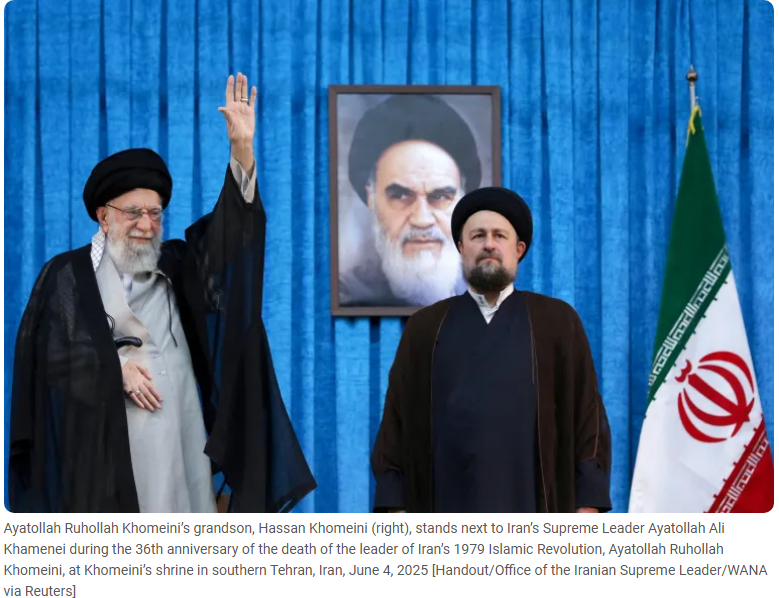
Khomeini, 54, is among the most discussed names in succession talks for the next supreme leader.
He is the grandson of Ayatollah Ruhollah Khomeini, the founder of the Islamic Republic, and also the custodian of his grandfather’s mausoleum in Tehran.
While he has not held a public office, Khomeini is a reformist figure known for his rather moderate views on public life and policy. He attempted to run for the Assembly of Experts in 2016, but the vetting council disqualified him.
2. 하메네이 둘째 아들, 모즈타바 하메네이는 누구인가?
1969년생, 이슬람 혁명수비대 (IRGC)
Who is Mojtaba Khamenei? Ayatollah’s son tipped to succeed Iran’s Supreme Leader
TOI World Desk / TIMESOFINDIA.COM /
Mar 01, 2026, 13:31 IST
Who is Mojtaba Khamenei? Ayatollah’s son tipped to succeed Iran’s Supreme Leader
Mojtaba Khamenei (Image/X)
Iran’s Supreme Leader Ayatollah Ali Khamenei was killed in joint US-Israeli strikes, triggering a leadership vacuum at the top of the Islamic Republic and setting off intense speculation over his possible successor.
Among the names drawing attention is Mojtaba Khamenei, the second-eldest son of the late leader, who has long been viewed as an influential but behind-the-scenes figure within Iran’s power structure.
Iran SMASHES American Patriot Defences; U.S. Bases Suffer Shock Attacks, Gulf Allies Under Fire
Senior official Ali Larijani signalled that a temporary leadership mechanism would be activated to ensure continuity. He said that an interim council comprising the president, the head of the judiciary and a jurist from the Guardian Council would assume responsibilities until a new Supreme Leader is selected, according to Times of Israel.
Israel attacks Iran
Israel Attack Iran Live Updates: Missiles strike US navy headquarters in Bahrain; explosions heard in Abu Dhabi, Doha
US, Israel attack Iran: AI Tel Aviv flight returning to India
Iran attacks US military bases across Middle East in operation 'Truthful Promise 4'
Who is Mojtaba Khamenei?
Mojtaba Khamenei, 56, is widely regarded as one of the most influential yet opaque figures within Iran’s ruling system. Born in Mashhad in 1969, he grew up during the revolutionary struggle against the monarchy of Shah Mohammad Reza Pahlavi. His father, then a prominent cleric, was repeatedly arrested and exiled by the Shah’s security forces.
After the 1979 Islamic Revolution transformed the family’s fortunes, Mojtaba moved to Tehran, where he attended the elite Alavi High School, an institution known for producing regime insiders.
He later pursued religious studies in Tehran and Qom, studying under prominent conservative clerics, including Ayatollah Mohammad-Taqi Mesbah Yazdi, according to state news agency UANI.
Although Mojtaba is a mid-ranking cleric and not an ayatollah, he has long been considered a powerful behind-the-scenes figure in the Office of the Supreme Leader. Analysts often compare his role to that played by Ahmad Khomeini, son of Ayatollah Ruhollah Khomeini, who served as gatekeeper and confidant during his father’s rule.
Mojtaba’s influence is believed to stem from his close ties to the Islamic Revolutionary Guard Corps (IRGC). He served in the Habib Battalion during the Iran-Iraq War and is said to have built lasting relationships with figures who later rose to senior positions in Iran’s security apparatus, including intelligence and Basij commanders.
Over the years, Mojtaba has been accused by political rivals and foreign governments of playing a role in election politics and security crackdowns.
He was sanctioned by the United States in 2019 under an executive order targeting individuals linked to Iran’s Supreme Leader. The US Treasury said at the time that Ali Khamenei had delegated aspects of his authority to his son, who was described as representing the leader in an official capacity despite holding no elected office.
Despite his proximity to power, Mojtaba’s potential succession would face significant hurdles.
Iran’s constitution requires the Supreme Leader to be a senior cleric with recognized religious authority and political competence. Mojtaba does not currently hold the rank of ayatollah, and father-to-son succession is deeply sensitive in a system founded on overthrowing a hereditary monarchy.
Nevertheless, some analysts argue that Mojtaba’s strong relationships within the IRGC and security establishment could bolster his candidacy, especially if influential factions rally behind him.
Unofficial campaigns in recent years have reportedly sought to elevate his religious credentials, though critics within the clerical establishment remain wary.
Under Iran’s constitution, the 88-member Assembly of Experts is responsible for selecting the next Supreme Leader. The body is tasked with assessing eligible clerics and appointing one who meets the required religious and political qualifications, according to CNN.
The constitution allows for an interim leadership arrangement if necessary, ensuring that executive authority continues while the Assembly deliberates.
자료.
Iran prepared for ‘all scenarios’ including Khamenei’s death: parliament speaker
By AFP
1 March 2026, 7:42 am
Iran's Parliament Speaker Mohammad Bagher Ghalibaf (2-L)) speaks with Lebanese counterpart in Beirut, Lebanon, October 12, 2024. (AFP)
Iran has prepared for “all scenarios,” including the way forward, after the death of Supreme Leader Ayatollah Ali Khamenei following US and Israeli strikes, its parliament’s speaker says.
“We have prepared ourselves for these moments and have considered all scenarios,” Mohammad Bagher Ghalibaf says in a video carried on state TV, adding that US President Donald Trump and Prime Minister Benjamin Netanyahu have “crossed our red lines” and “will suffer the consequences.”
Who is Ali Larijani, the Iranian official promising a ‘lesson’ to the US?
Ali Larijani is often viewed as a pragmatist and has an important role following the killing of Khamenei.
www.aljazeera.com


