2026년 6월 24일 로이터 보도.
브라질 청년층 (16세~34세)이 부분적으로 룰라 정부에 대한 지지 철회 이유들 (소득, 대졸자 증가, 양질 일자리 부족, 주택,치안, 부패 스캔들 등)
전 연령층 중, 유일하게 청년층만 룰라 정부에 대한 불신이 지지보다 높았다. 그리고 브라질 청년층 (16세~34세)이 부분적으로 룰라 정부에 대한 지지를 철회했다. 그 이유는
1) 12년간 소득 증가 없고, 좋은 일자리 부족
지난 10년간 대졸자가 2배로 증가했지만, 소득 증가는 '학력' 기대에 미치지 못했다. 고졸자와 소득 격차도 줄어들었다. 그 결과 이 대졸 청년층 중에 '자본주의적 시장 지향 정책을 선호'하는 층이 생겨났다.
불안한 치안.
4월 대규모 은행 사기 사건으로 인한 공공연금 위험 노출로 인한 행정부에 대한 불신.
2) 미국, 유럽, 한국에서 청년 우경화 현상이 발생한 것처럼 브라질에서도 동일한 현상이 발생했다.
2024년 독일 프리드리히 에버트 재단에서 실시한 여론조사에서, 브라질 청년의 38%가 자신이 우파라고 규정.
중년층 이상의 브라질 성인들의 다수는 이념적 성향을 '좌파'와 '중도좌파'라고 답해.
3) 우파 정당 '사명'이라는 뜻의 미싸우 (missao) 당. 지도자는 헤낭 산투스 (Renan Santos) 이다.
한 여론조사에서, 16~24세 층에서 산투스는 36% 지지율을 얻어, 자유당 플라비오 볼소나루와 노동당 룰라를 이겼다.
물론 전 연령층에서는 아직 두 정당에 뒤처져 있다. 헤낭 산투스의 청년층 대상 소통 방식은,
'좌파(룰라)가 기득권,기성정치권이다' 라고 공격하다. 소셜 미디어를 주로 이용, 자극적인 발언과 정책 발표. 특히 부패와 치안 문제에 집중, 부패 척결과 범죄 강력 대응 주장. 기성 정치인들이 권력 독점해 청년이 들어설 정치적 공간이 없다고 주장.
브라질 정당과 주요 인물
1. 페테 (PT) 브라질 노동당 (파르치두 두스 트라발야도리스 Partido dos Trabalhadores) , 룰라 다 실바
2. 페엘리 (PL) 브라질 자유당 (파르치우 리베라우 Partido Liberal) , 자이르 볼소나루 (Jair Bolsonaro) , 플라비오 볼소나루 (Flavio Bolsonaro:45)
3. 브라질 미싸우 (Missao). 헤낭 산투스 (Renan Santos)
브라질 노동당
PT Partido dos Trabalhadores 빠르치두 두스 트라발야도리스
노동자 단수 복수
트라발랴도 Trabalhador — 노동자 (단수, 남성형)
트라발야도라 Trabalhadora — 노동자 (단수, 여성형)
트라발야도리스 Trabalhadores — 노동자들 (복수, 남성형 또는 혼성 집단)
트라발야도라스 Trabalhadoras — 노동자들 (복수, 여성형)
Why some young Brazilian voters are abandoning Lula
By Manuela Andreoni and Andre Romani
June 24, 20266:07 AM EDTUpdated June 24, 2026
Item 1 of 6 Demonstrators from the right-wing party Missao (Mission in english) and group Movimento Brasil Livre (MBL) hold a flag from the Brazil Monarchy during a protest against corruption and demanding harsher penalties for criminals, in Sao Paulo, Brazil, April 11, 2026. REUTERS/Amanda Perobelli
[1/6]Demonstrators from the right-wing party Missao (Mission in english) and group Movimento Brasil Livre (MBL) hold a flag from the Brazil Monarchy during a protest against corruption and demanding harsher penalties for criminals, in Sao Paulo, Brazil, April 11, 2026. REUTERS/Amanda Perobelli Purchase Licensing Rights, opens new tab
Summary
Brazil's young adults are among most right-wing in Latin America
Shift right follows rising expectations, economic frustrations
Right-wing parties renew their ranks, target youth online
SAO PAULO, June 24(Reuters) - Ricardo de Lima Filho, a 34-year-old video game translator, has voted for left-wing presidential candidates in every election he can remember, including President Luiz Inacio Lula da Silva of the Workers Party in the 2022 runoff.
This year, however, he will go to the polls in October hoping to elect a right-wing president.
"I've lived most of my adult life under Workers Party governments," he said. But with the economy stuck in a lower gear, public safety backsliding, and corruption scandals in the news, he said, "I couldn't feel the improvement that I expected."
Lula counted on young voters, between the ages of 16 and 34, to win the 2022 election against far-right former President Jair Bolsonaro. But this time around, polls show the former union leader is struggling.
Overall, Lula remains popular and is widening his lead over his rivals. However, a June poll by Quaest, a Brazilian polling firm, showed that young adults were the only age group in which disapproval of Lula's government exceeded approval.
LEADING THE REGION
Young Brazilians are among the most right-wing in their cohort in Latin America, with 38% identifying as such in a 2024 survey done by a foundation linked to Germany's Social Democratic Party. And a December poll by AtlasIntel showed older generations were more likely to identify as left or center-left.
The conservative tilt is stronger among men, who were two percentage points more likely to identify on the right in that survey and have skewed toward conservative candidates in presidential polling.
The rise of the young male conservative is part of a global trend, with parallels in Europe, the United States and South Korea, for example.
But in Brazil, where Lula and his former chief of staff won five of the last six presidential races, the shift also reflects a generation that came of age associating the left with a string of economic disappointments over the past dozen years.
Right-wing presidential hopeful Renan Santos, 42, has capitalized on the frustration, drawing early support from disaffected young voters, although he resists calling them "conservative."
"They are anti-left. It's different," he said in an interview at the Sao Paulo studio where he shoots his daily posts on social media. "The left is the establishment."
'ASHAMED TO SAY'
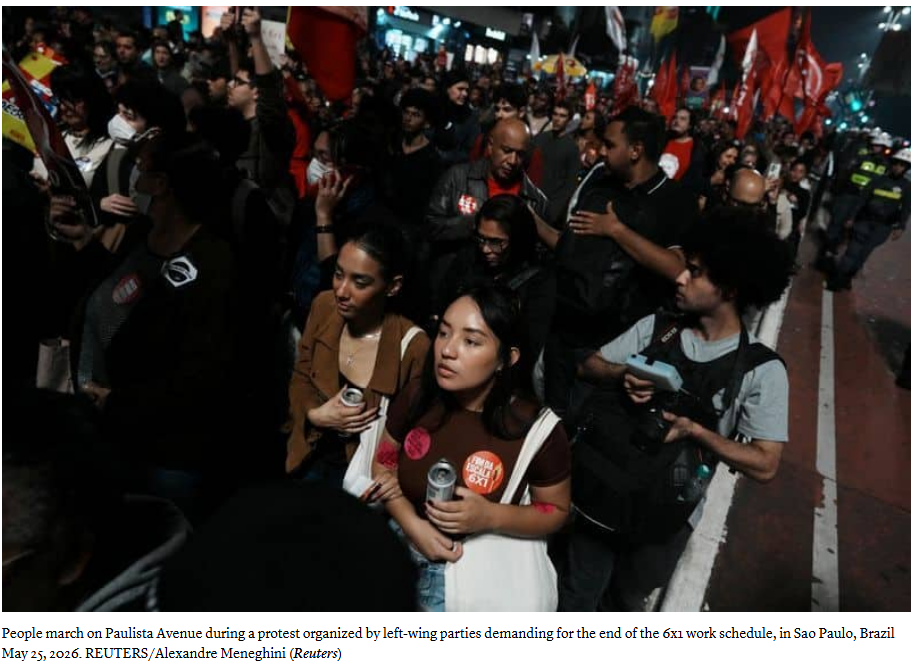
At a May meeting in another corner of the city, young Workers Party and other progressive leaders met for some soul searching over how they had lost ground with so many young voters.
Participants ran through explanations, from possible bias of tech platforms to the combative language of social media. They workshopped policy ideas, such as shortening the workweek or how to adapt housing programs to young people's needs to connect with the zeitgeist.
"Are people ashamed of saying they are left-wing?" one young man asked the group.
Digging into the Quaest polling data, the firm's director, Felipe Nunes, told Reuters that the surveys of young Brazilians do not reflect more conservative ideology per se. For example, they largely support the expansion of public services such as expanded access to higher education.
Yet polls show a widespread frustration with the economic stagnation linked to recent leftist governments that struggled to keep up with rising expectations.
While the number of Brazilians with a university degree almost doubled in the last decade, according to government data, graduates' earnings did not grow as expected.
Inflation-adjusted income for university grads is still lower than in 2014. They still earn more than those with only high school education, but the gap has shrunk.
"Young people went to university ... and when they returned to the job market, they didn't see real economic result," Nunes said.
The search for answers has pushed many young voters toward the more market-oriented platforms of candidates on the right and center of the political spectrum, he added.
RENEWING RANKS
At an April demonstration on Sao Paulo's Avenida Paulista, 28-year-old journalism student John Vitor Lima and dozens of his peers gathered to protest a vast banking fraud scandal putting public pension funds at risk.
Most of the protesters were young men demanding an end to corruption and harsher penalties for criminals.
Organizing the demonstration was the right-wing party Missao, led by the presidential contender Santos. It was the second that Lima attended.
Santos has proposed making it easier to arrest suspected gang members and tying the use of federal funds allocated to political parties to the performance of their mayors.
"Our generation is not in positions of power," he said, reflecting on the appeal of the young conservative candidate. "Santos brings hope ... In general, people in positions of power are older."
In a May poll conducted by AtlasIntel, Santos captured a striking 36% of voters aged 16 to 24, outpacing both Lula and his main rival, Senator Flavio Bolsonaro, the son of former right-wing President Jair Bolsonaro.
Despite his popularity with some young voters, Santos is still polling in single digits across the electorate. Still, his campaign is part of a years-long renewal among right-wing parties that has included some of the youngest federal lawmakers in Brasilia.
The top candidates in Brazil's presidential race reflect the same dynamic. Flavio Bolsonaro, drawing the most votes on the right, is 45 years old. Lula, 80, is Brazil's oldest president.
Earlier this year, a Workers Party representative said it was still reaching out to young voters, engaging them on issues like climate change, an issue that they warn the youth will feel the most, while reminding voters of Jair Bolsonaro's harmful legacy on the environment.
Lula has also empathized with youth frustration, saying in April he knows there is a perception of corruption, but he urged young voters to participate politically. "Even when you think no politician is good enough, don't give up on politics, get involved in politics."
Flavio Bolsonaro, meanwhile, has been posting videos urging young people to vote, making an appeal in one video to those "doing everything right, yet going nowhere."
Reporting by Manuela Andreoni and Andre Romani; Additional reporting by Lisandra Paraguassu in Brasilia; Editing by Brad Haynes and Aurora Ellis