푸에르토카베요 군사반란, 이른바 ‘엘 포르테냐소' El Porteñazo
700명 사망, 1천명 부상
베네수엘라 정치- 반란 이유,
반란 선언은 Punto Fijo 협약으로 형성된 정치질서에 대한 반대, 새로운 제헌의회 요구, Rómulo Betancourt 정부에 대한 반대 등
1958년 마르코스 페레스 헤메니스 독재 타도. 그 이후, 1959년 로물로 베탕쿠르 정부 탄생
로물로 베탕쿠르 Rómulo Betancourt
그러나 군 내부 베탕쿠르에 대한 불만 세력, 좌파 세력과 쿠바 혁명 영향력 확대.
1962년 5월 4일, 카루파나조 군사 반란 발생, 실패
(*카루파나조 Carupanazo)
그 이후 다시 푸에르토 카베요에서 반란이 발생.
(Puerto Cabello)
6월 2일. 해군 장교들이 반란을 일으켜, 해군기지를 장악.
푸에르토카베요 군사반란, 이른바 ‘엘 포르테냐소'
핵심 장교들
마누엘 로드리게즈 (Manuel Ponte Rodríguez) — 해군 대령(Capitán de Navío)
페드로 실바 (Pedro Medina Silva) — 해군 프리깃 함장, 중령(Capitán de Fragata)
빅토르 모랄레즈 (Víctor Hugo Morales) — 해군 코르벳 함장(Capitán de Corbeta)
장소: 푸에르토 카베요 시내, 거리 라 알칸탈릴라 (La Alcantarilla) 시가전
정부군 카라보보 (Carabobo Battalion)과 반란군의 시가전.
푸에르토카베요의 실제 도시공간—상점과 주택 등이 있는 시가지의 한 모퉁이—에서 벌어진 전투.
라 알칸타릴라(La Alcantarilla)는 베네수엘라 푸에르토카베요의 도시 입구에 있던 특정 지역·교차로를 가리키는 지명. 1962년 엘 포르테냐소 당시 이곳에서 정부군과 반란군이 격렬하게 충돌함.
6월 2일 ~6월 6일
6월 6일, 반란군은 포르틴 솔라노 (Fortín Solano)라는 요새에서 저항했으나, 정부군에 의해 함락. 반란 지도자들이 체포되면서 반란이 최종적으로 종결. 사망자 400명 이상, 부상자 약 700명
당시 솔라노 요새 전투

솔라노 요새 (성)
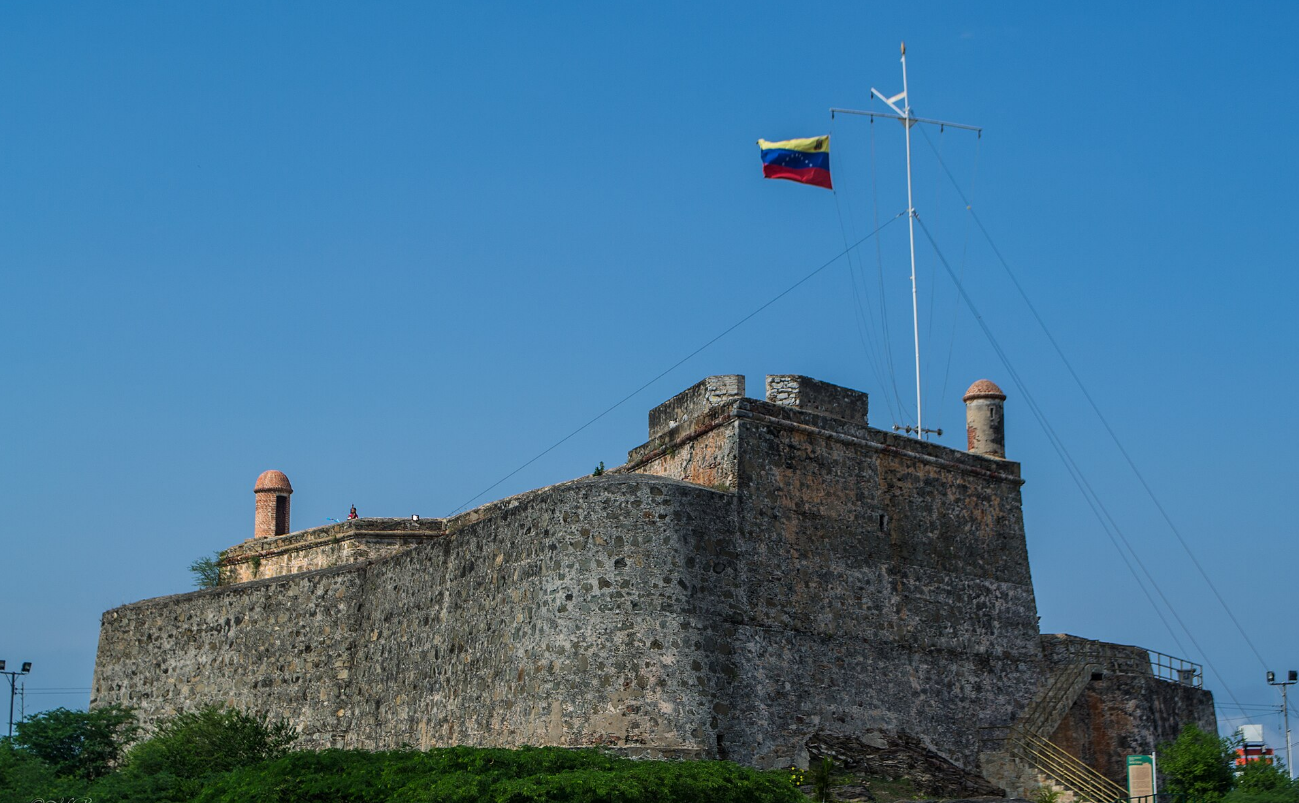
사진 취재 기자 이름. 엑토르 론돈 로베라(Héctor Rondón Lovera)
장소: 푸에르토 카베요
시간. 1962년 6월 4일.
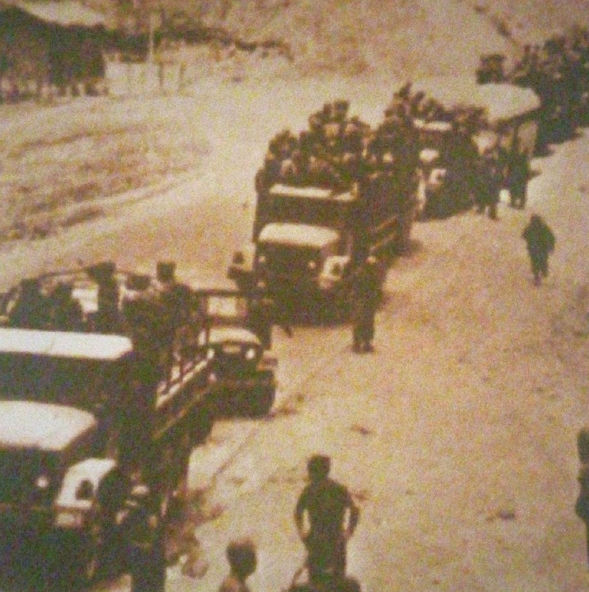
정부군,
Government convoy en route to Puerto Cabello during the Porteñazo.
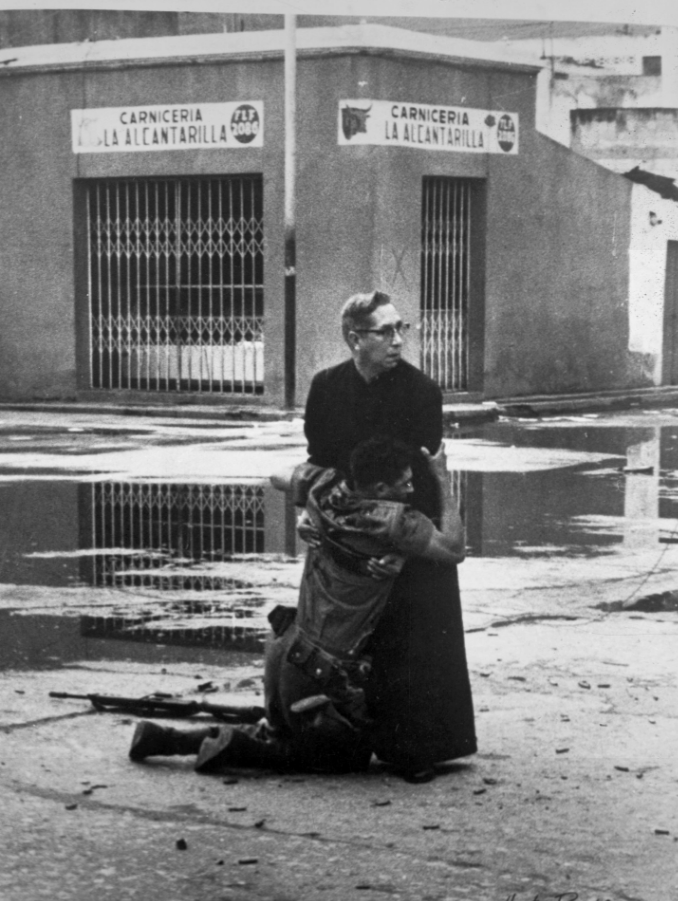
Aid From The Padre
Posted on May 5, 2013
1
Behind the camera: Hector Rondon
사진 기자. 엑토 론돈
장소. 푸에르토 카벨로
Where: Puerto Cabello, Venezuela during the El Porteñazo uprising
Photo Summary: Navy chaplain Luis Padillo holding a wounded soldier as sniper bullets hit the ground around him
Picture Taken: June 4, 1962
Hector Rondon was covering the short-lived El Porteñazo uprising that took place in June 1962. Lasting for four days (2 June 1962 – 6 June 1962) naval units of the Venezuelan military rebelled taking the city of Puerto Cabello and its Solano Castle. The uprising against the Venezuelan government of Rómulo Betancourt was quickly crushed but not before Hector Rondon was able to capture this iconic photo which earned him the 1963 Pulitzer Prize for Photography.
Taking the photo
While working in the Venezuela city of Caracas Hector Rondon heard of the Porteñazo uprising in the city of Puerto Cabello about 60 miles (97 km) away. A month earlier another uprising against the Betancourt government called, El Carupanazo, in Carúpano city, had been successively put down. Wanting to cover this second rebellion he raced to Puerto Cabello and arrived at the same time as government tanks were about to engage the Porteñazo rebels.
Men lying on the ground
I found myself in solid lead for forty-five minutes … I was flattened against the wall while bullets were flying, when the priest appeared. The truth is, I don’t know how I took those pictures, lying on the ground.
Rondon shot the government soldier crawling his way up Navy chaplain Luis Padillo’s robe as Padillo looks in the direction of the rebel sniper fire.
Government forces quickly took control of the town and over two days pounded the remaining rebels, that had taken cover in the Solano Castle, into submission. A handful that weren’t captured or killed were able to escape into the jungle.
Hector Rondon
Man helping a soldier
Other pictures Hector took took
Hector Rondon was born on November 25, 1933, in Bruzual, Venezuela. He worked at a glass factory, joined the military and then worked as a taxi driver before in 1955 he became the official Los Togues regional photographer for the city and state officials. In 1959 he joined the Caracas Newspaper, La Republica, as its photographer. He was the second non-American to win the Pulitzer Prize for photography.
베네수엘라 한 정부군인이 반군과 싸우다가 총상을 입고 사망 직전.
사제가 그의 몸을 붙들고 있다.
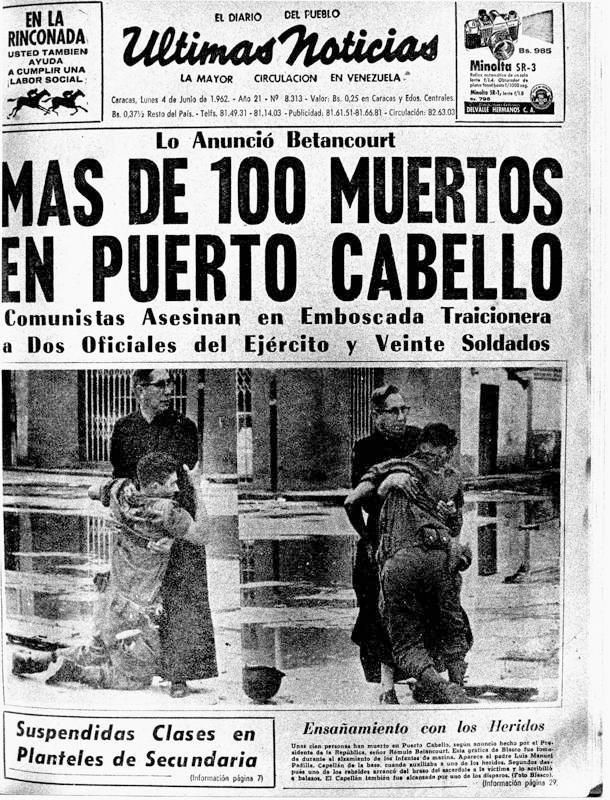
반란군 지휘관
1. 마누엘 로드리게즈 해군 대령. Manuel Ponte Rodriguez
(1964년 , 44세 일기로 사망, 30년 복역중 심장마비로 사망) 기사.
정부군과 반란군의 전투로, 당시 200명 사망, 1천명 부상
베네수엘라 FALN(민족해방 무장군) 최고지도자, 코뮤니스트 그룹
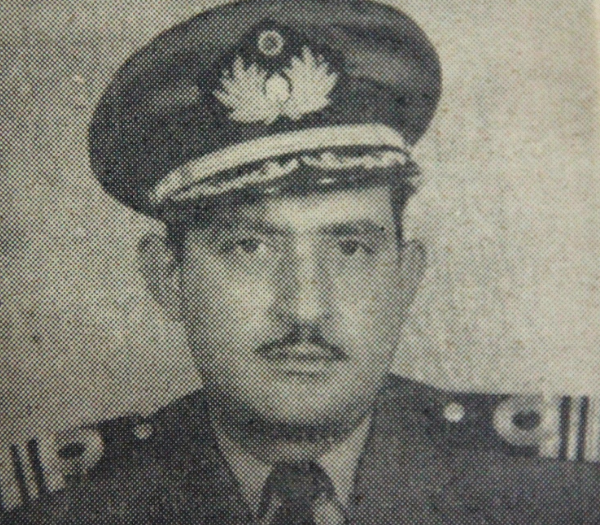
2. 페드로 실바 (Pedro Silva)
1962년 6월 3일 정부군이해군 중령 페드로 실바( Pedro Medina Silva) 체포
30년 형. 석방 이후, FALN 활동 지속 .
2014년 사망.
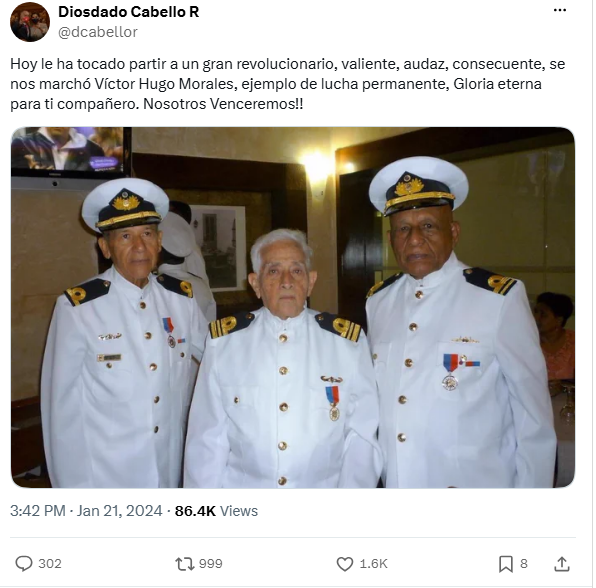
3. 빅토 모랄레스 (·Víctor Hugo Morales)
해군 소령.
1962 년 6월 2일, 푸에르토 카베요에서 반란, 체포 후 군산 재판 30년 형
6년간 이슬라 델 부로 (Isla del Burro) 수감
1968년 10월 19일경 출소.
베네수엘라 좌파,혁명운동 참여
2004년 차베즈 (Chavez) 와 만남
2010년대까지 정치활동 지속
2024.1월.21일 별세

PONTE RODRIGUEZ, 44, FOE OF BET ANCOURT
Share full article
July 26, 1964
PONTE RODRIGUEZ, 44, FOE OF BET ANCOURT
CARACAS, Venezuela, July 25 (AP) — Manuel Ponte Rodriguez, who led the Puerto Cabello rebellion against President Romulo Betancourt two years ago, died of a heart attack today in prison, the Defense Ministry. announced. He was 44 years old.
Mr. Ponte Rodriguez, a former navy captain, received a 30‐year prison term — Venezuela's severest—for leading other naval officers against the Government. A concentrated land, sea and air attack, against Captain Ponte Rodriguez's forces put down the rebellion but not before nearly 200 persons had been killed and 1,000 wounded.
Last year, in press statements from his cell, he said he was supreme commander of the pro‐Communist terrorist organization F.A.L.N (Armed Forces for the National Liberation). He was removed as head of a navy staff section a month before the rebellion, when suspected of sympathizing with a revolt in May of 1962 at Carupano.
While Government troops were breaking the back of the rebellion on June 3, 1962, another rebel leader, Comdr. Pedro Medina Silva, was captured with Captain Ponte Rodriguez.
위키피디어 설명.
푸에르토카베요 군사반란, 이른바 ‘엘 포르테냐소'
El Porteñazo (2 June 1962 – 6 June 1962) was a short-lived Communist[2] military rebellion against the government of Rómulo Betancourt in Venezuela, in which rebels attempted to take over the city of Puerto Cabello, located ~75 miles (121 km) West of the capital Caracas.[3] The rebellion was on a substantially larger scale than that of El Carupanazo a month earlier.
On 2 June 1962, units led by navy Captains Manuel Ponte Rodríguez, Pedro Medina Silva and Víctor Hugo Morales went into rebellion.[1] The 55th National Guard Detachment declined to participate. The rebellion was crushed by 3 June, leaving more than 400 dead and 700 injured, and by 6 June the rebels' stronghold of Solano Castle had fallen.[1]
A photograph of chaplain Luis María Padilla holding a wounded soldier during the rebellion won the 1963 Pulitzer Prize for Photography and 1962 World Press Photo of the Year for Héctor Rondón of La República.[4][5][6]
Testimonies
"Aid from the Padre", Héctor Rondón's Pulitzer Prize-winning photograph of a priest providing comfort to a wounded soldier during the fighting
Different stories retelling the event mourned Venezuela, taking the rebellion as an unjust and unnecessary act of war. Many reconciled what had happened according to their personal and political affiliations.
Alí Brett[7] wrote, according to his investigation:
After 6am on Sunday the masonry of Solano Castle began receiving the impact of bombs. When the bombing began, we were in the neighbourhood "Las Tejerías" a few metres from the old fortress, which, for the first time in several centuries was a victim of an attack of this nature.
The fort was an enigma of the uprising and much was speculated about its power. All of the stories told of the advantages and strategic position of the "Black Burro" (a popular name for the antique cannon). People knowledgeable of this weapon know that if it was fired, even only once, Puerto Cabello would disappear.
Barely keeping up during the insurgency, the marines raised the Naval Base to guard the fort, whose inhabitants, by this day, Monday the 4th of June, were already dead. The presence of the executive officials and some military leaders clarified the mystery that had almost become the truth during the course of events, due to ill-founded stories.
He concludes his investigation by saying:
That the fort could be used as a point of operations for the rebels signifies one of the many known military errors of the event; after the appearance of the airplane as an element of war, these strengths were of no strategic effect.


