벌을 살리면, 사람도 살린다. '꽃가루 매개자' 벌과 나비가 인간 식량과 정신 건강에 기여함.
네팔의 경우, 벌과 나비 등 '꽃가루 매개자' 증가를 위해, 야생 꽃들 심기, 벌 둥지 제공, 살충제 사용 감소 운동을 펼친다면,
농가 소득의 30%를 증가시킬 수 있고, 영양 부족 인구의 9%를 구제할 수 있다.
네팔 룸라 동네 주민이 비타민 A,E, ‘천연 엽산 (폴레이트)을 섭취하는데, 벌과 나비와 같은 꽃가루 매개자의 역할이 20% 이상이고, 룸라 농가 수입의 44%를 차지한다.엽산은 자연 식품 내에 존재하는 천연 형태의 비타민 B9을 지칭함.
발췌 번역
1. 2022년 연구에 따르면, 세계 인구의 80%가 1차 건강을 위해 약용 식물을 필요로 함.
그런데 2만 8천종의 약용식물들의 수분을 돕는 것이 곤충이다 (*이 중 벌의 역할 중요)
약용식물 사례, 면역체계를 돕는 에키네시아, 수면장애를 치료하는 캐모마일 (차)
벌과 나비는 인간의 정신건강에도 도움이 되고, 생태계 보존에도 큰 역할을 한다.
2. 영양부족 해결책
2015년 모델링 연구에 따르면, 전 세계 ‘꽃가루 매개자(벌,나비,새,박쥐 등)’가 감소해 제 역할을 못한다면, 매년 영양부족으로 140만명의 인구가 죽을 것이라고 예측.
3. 2022년 조사, 전 세계 채소, 과일, 견과류 생산의 3~5%의 감소 원인은 ‘꽃가루 매개자들’의 역할 감소 때문임.
4. 삶의 양식 변화에 따른 질병 증가와, 그 예방책
앉아서 생활하는 삶의 양식, ‘붉은 고기’ 섭취하는 생활로 인해, 심장병, 뇌졸중, 당뇨병이 증가하고 있다. 과일, 채소, 견과류와 씨앗은 이러한 병 예방책이 될 수 있다. 그런데 이것들의 생산량의 감소 원인이 ‘꽃가루 매개자’의 감소에 있다. 네팔 줌라 마을 뿐만 아니라, 동유럽, 구-소련 지역들에서도 영양 감소 현상이 나타나고 있다. 1년에 50만명의 사망 원인이 되고 있다. (추정치임)
Pollinators in peril: scientists reveal the hidden human health costs of the world’s disappearing bees
Pollinators in peril: scientists reveal the hidden human health costs of the world’s disappearing bees
Crops and flowers rely on them for survival, but wild bees are declining – and crucial nutrients will go missing from our diets as a result
The age of extinction is supported by
theguardian.org
About this content
Gloria Dickie
Wed 10 Jun 2026 09.00 BST
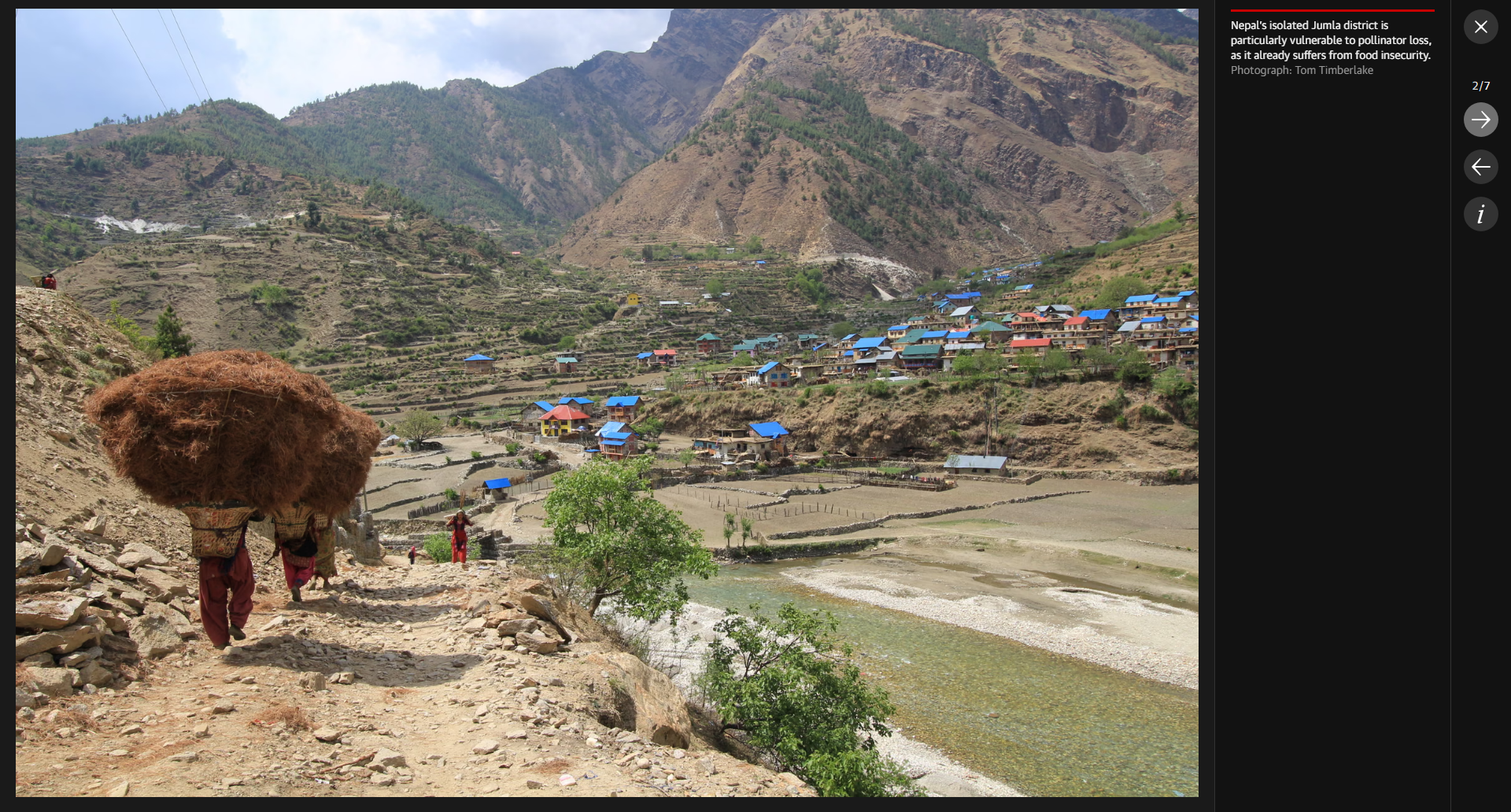
There are few ways in and out of Nepal’s Jumla district. The Karnali highway, considered one of the world’s most dangerous roads, provides the only land link, splicing through the Himalayas to connect Jumla’s terraced valleys to the rest of the country. As such, the 120,000 people that live there are almost entirely self-sufficient, with most of them eating and selling what they grow.
It’s a tenuous existence, plagued by food insecurity and malnutrition. In recent years, local beekeepers have bemoaned languishing hives and dwindling honey production, observing that roughly half of their bees seem to have vanished over the past decade. These concerns, however, ignore an even more insidious impact.
“They saw these bees as valuable for honey, but they didn’t really realise that they were also essential for supporting the production of their crops,” says Thomas Timberlake, an ecologist at the University of York.
In a study published last month in the journal Nature, Timberlake and his colleagues set out to quantify just how important the area’s pollinators were to the health of those living in 10 remote Jumla villages.
People walk down a steep rocky pathway, carrying huge loads of a dark brown crop on their heads, towards a green valley with scattered houses with colourful roofs, surrounded by mountains.
View image in fullscreen
Nepal’s isolated Jumla district is particularly vulnerable to pollinator loss, as it already suffers from food insecurity. Photograph: Tom Timberlake
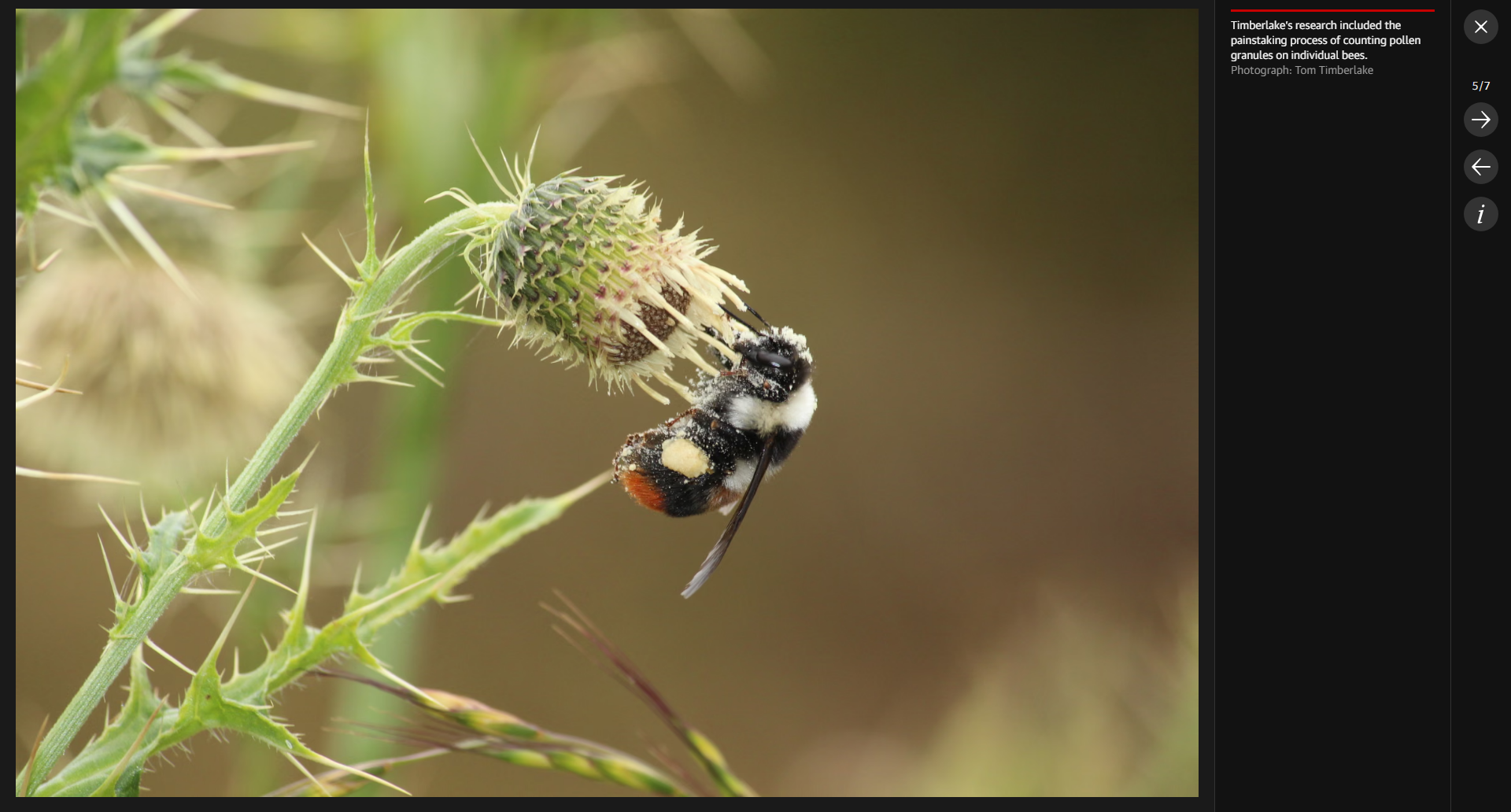
To do so, they tracked people’s diets, crop yields, and farming income over a one-year period, alongside pollinator interactions with their crops – including the painstaking process of counting pollen granules on fuzzy bee bodies.
It turned out that pollinators were directly responsible for more than 20% of inhabitants’ vitamin A, vitamin E and folate intake, and 44% of their farming income. It is the first study of its kind to provide direct evidence of the bond between pollinators and human health.
“These types of communities are so vulnerable because they are very isolated geographically. There are not good trade links into there, and they’re very poor,” says Timberlake. “If the yields of local fruits and vegetables decline, they are not going to be able to supplement that by buying imported foods. They just are not going to eat those fruits and vegetables.”
Ecologists have long stressed the importance of pollinators for human health, yet measuring the direct benefits to our wellbeing is still an evolving field of study. It is also one that has become all the more urgent as meadows fall silent and the droning hum of bees fades to a whisper. Over the past decade, scientists have sought to uncover precisely how pollinators help to boost nutrition, revealing the hidden health costs of pollinator declines.
Haystacks on a hillside near a few houses surrounded by trees and shrubs.
View image in fullscreen
If crop, fruit and vegetable yields in places like Jumla decline, people will simply lose access to the nutrients in those foods, warns Timberlake. Photograph: Naomi Saville
In 2015, a modelling study in the Lancet found that if all of the world’s pollinators were to collapse, an additional 1.4 million people would die every year from malnutrition-related diseases. But Sam Myers, the director of the Johns Hopkins Institute for Planetary Health and co-author of the research, says that he desired to move beyond the hypothetical and assess real-world impacts. “We hope that pollinators are not going to collapse completely. So … what can we say about the penalty we’re paying today from insufficient pollinators?”
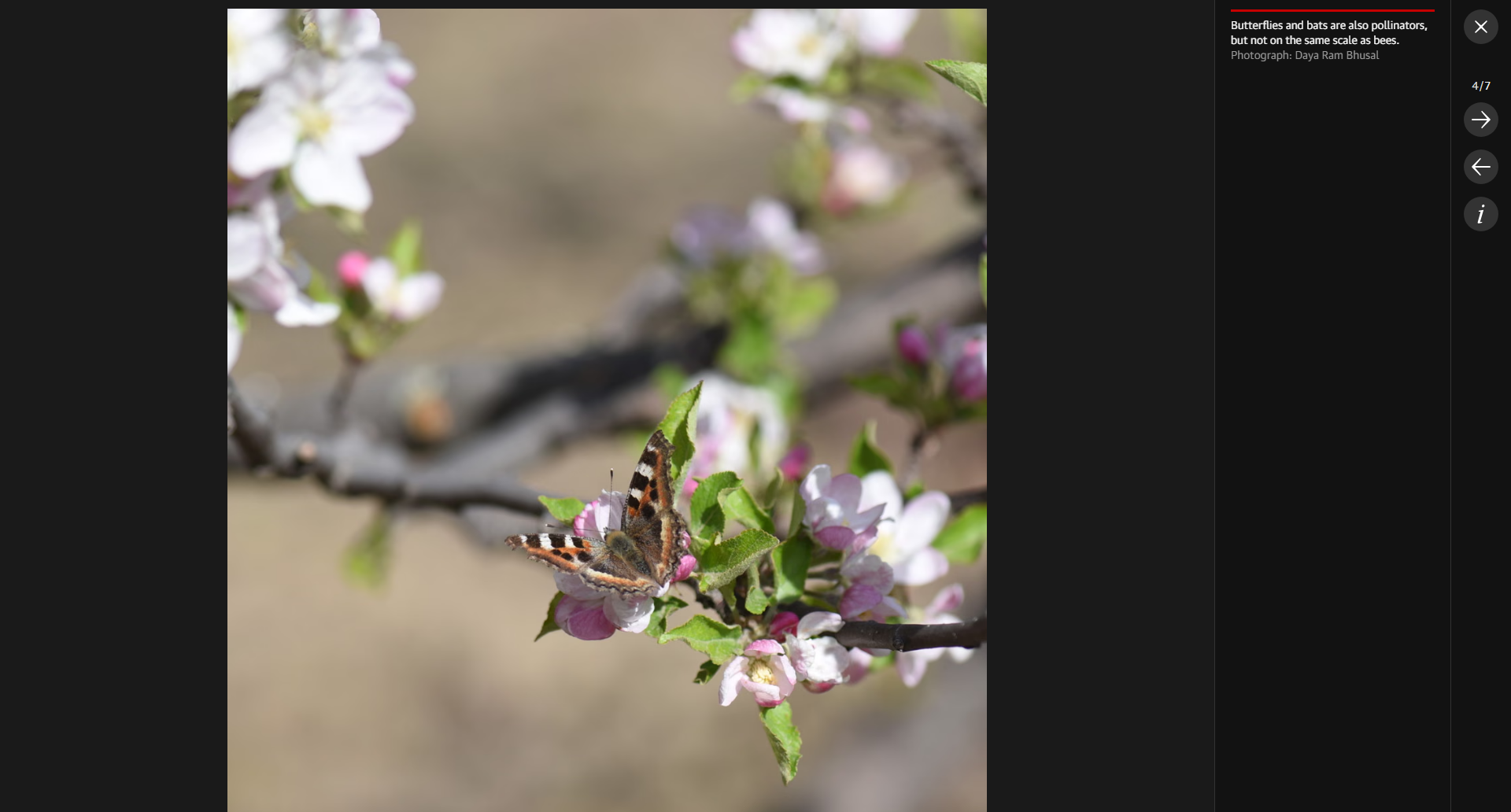
While birds, bats and butterflies are all considered pollinators, few species do as much for the world’s flowers and crops as bees. Honeybees and wild bees are the most prolific pollinators, effortlessly moving pollen from the male anther of a flowering plant to the female stigma. This process fertilises the plant so it can reproduce, generating seeds and fruits. About three-quarters of all agricultural crops rely on pollinator services.
A butterfly perches on a pink blossom.
View image in fullscreen
Butterflies and bats are also pollinators, but not on the same scale as bees. Photograph: Daya Ram Bhusal
That should be cause for concern, experts say, as pollinators across the world are in peril. As forests, grasslands and wildflower meadows have been converted to industrial-scale agriculture and development, bees and butterflies have been left without food or nesting sites. Pesticides – especially neonicotinoids, which interfere with the bees’ nervous system – are also taking a toll, alongside the climate crisis and the spread of invasive species.
When IPBES, the intergovernmental platform for biodiversity science, last took stock of pollinator populations in 2016, it estimated that more than 40% of bee species may be threatened globally, though many lacked sufficient population data.
“The big picture remains the same,” says Simon Potts, a biologist at the University of Reading who co-chaired the assessment. “Evidence suggests that, where we have data, there are definitely declines in most groups of wild pollinators. As is always the case, the best evidence and data comes from North America and Europe.”
In 2025, the International Union for Conservation of Nature (IUCN) red list of threatened species found that at least 172 bee species in Europe are at risk of disappearing.
Potts cautions that while steep declines have been documented in wild pollinators, it is important to distinguish between these groups and managed bees when it comes to fears about declining pollination. About half of the world’s crops are pollinated by bees – often honeybees – kept in artificial hives and treated more like livestock to aid with commercial agricultural production. These managed bee populations have held fairly steady, even as wild species have plummeted.
Hopefully, decision-makers will start to explore best practices for ensuring a healthy pollinator population as part of ensuring a healthy human population
Sam Myers, research scientist
Still, declines in wild pollinators are enough to cause adverse health effects. Globally, between 3% and 5% of vegetable, fruit and nut production is being lost due to inadequate pollination, according to 2022 research findings published in the journal Environmental Health Perspectives.
The study, led by Myers, observed that managed honeybees “have not been able to compensate for wild pollinator losses nor keep pace with the growth in pollinator-dependent crops that rely on them”. This, the study says, makes the use of managed bees a risky solution to compensate for wild pollinator losses.
A red, white and black bee on a thistle
View image in fullscreen
Timberlake’s research included the painstaking process of counting pollen granules on individual bees. Photograph: Tom Timberlake
Myers and his colleagues went on to connect diminished pollination to an additional 500,000 deaths a year, using data from hundreds of farms across the world, information on yields, diet-related health risks, and a computer model tracking the global food trade.
These deaths are not only relegated to the poor, isolated communities such as those found in Jumla district. “Most of that mortality was in parts of eastern Europe, and former Soviet Republic places,” says Myers. Fruit, vegetables, nuts and seeds help to prevent heart disease, stroke and diabetes. “These metabolic diseases are much more prevalent in places where they’ve already transitioned into sedentary lifestyles, and where they have diets full of red meat.
A bumblebee on a white flower
Collecting pollen can be as exhausting for bees as flight take-off, study shows
Read more
“If we lose our pollinators around the world, those commodities are going to get more expensive because the yields are going to fall. What that means for middle-class families … is they’re not going to be able to afford the most nutritious foods that help protect them.”
As temperatures rise and agricultural practices intensify, developing countries will probably face more health issues from wild pollinator loss. Scientists recently used computer models to predict which regions of the world face the greatest risk of crop pollination shortfalls owing to pollinator declines caused by the climate emergency and agricultural expansion.
The results, published in the journal Science Advances, showed that the tropics – specifically sub-Saharan Africa, northern South America and south-east Asia – were the most vulnerable, with large losses projected for cocoa in Africa, mango in India and watermelon in China. Such impacts would risk human wellbeing, the authors noted.
A man reaches up to blossoms on a tree.
View image in fullscreen
A farmer manually pollinates a fruit tree. Photograph: Tom Timberlake
Jumla, in many ways, is emblematic of the shifts occurring across developing countries. Beekeepers in western Nepal have named the climate crisis and the loss of flowers the main drivers of falling bee populations in hives. Nepal is also going through a phase of rapid agricultural intensification. “It’s losing [pollinator] habitat quite quickly because of the expansion of crop monocultures and introduction of new pesticides,” Timberlake says.
If bee populations continue to fall and local yields drop, “people are going to start to consume more of the non-pollinator dependent foods, like grains and cereal, that don’t have those key nutrients”, he says.
Bees don’t just help to pollinate the plants that we eat, they also fertilise those we use for medicine. While most health and pollinator studies have focused on nutrients derived from food, about 80% of the world’s population also relies on herbal medicine for primary healthcare, according to a 2022 study. Ecologists estimate that about 28,000 medicinal plants, including echinacea for boosting the immune system and chamomile for sleep troubles, are pollinated by insects.
Bees and butterflies also help to pollinate the green spaces that benefit our mental health and improve environmental quality, says Lucas Garibaldi, director of an agroecology and rural development institute in Argentina.
Drawing clear links between human health and pollinator health remains a challenge, Garibaldi says. Four years ago, he set out to assess how many researchers had done so, turning up only two peer-reviewed modelling studies on the topic.
“Human health depends on multiple causes,” he says. Even if yields decline, some people are able to easily buy food while others cannot. And, when assessing nutrition, “it is very difficult to isolate exactly the food that comes from particular pollinators”.
An almost entirely yellow bee investigates a flower.
View image in fullscreen
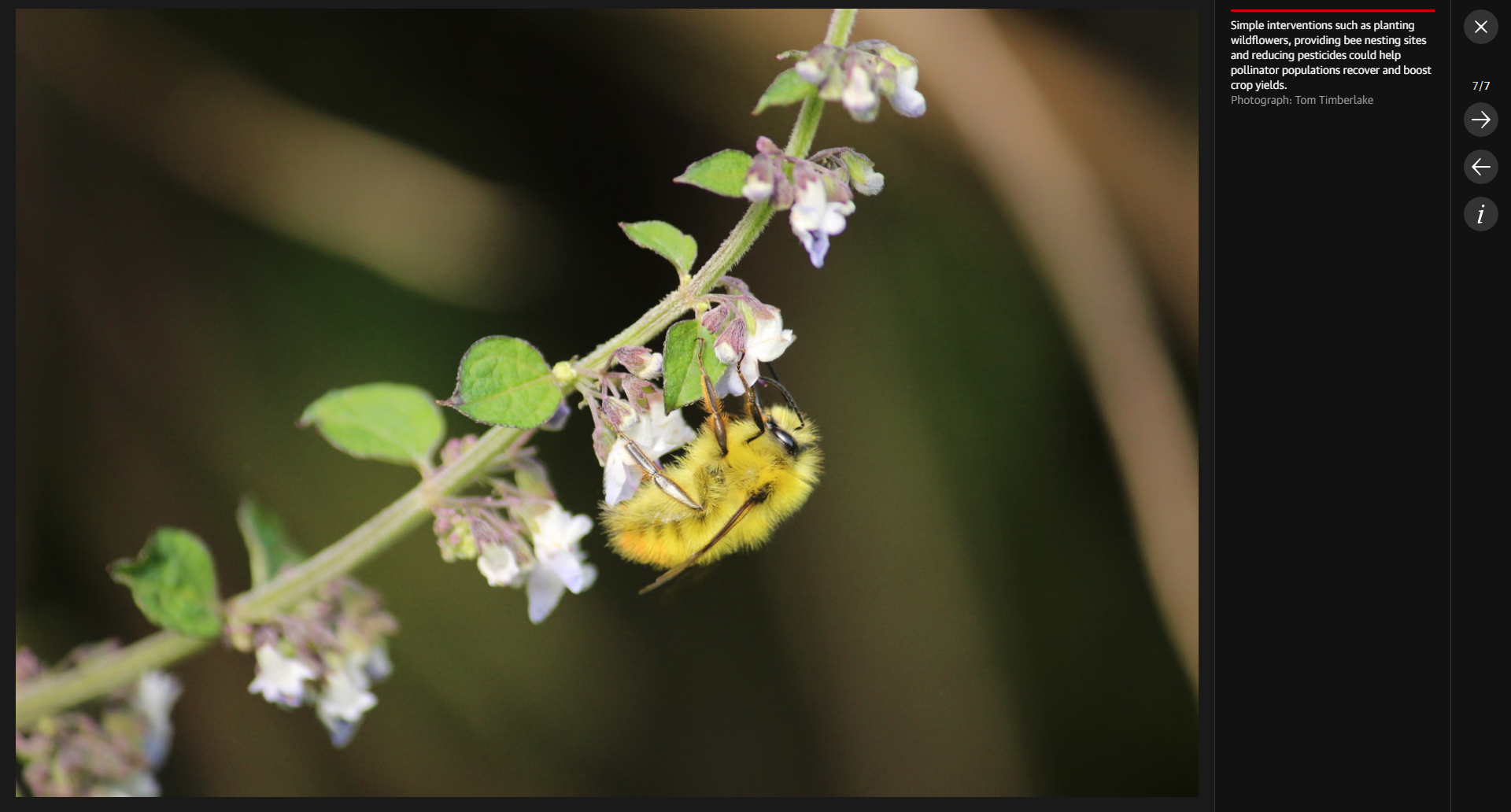
Simple interventions such as planting wildflowers, providing bee nesting sites and reducing pesticides could help pollinator populations recover and boost crop yields. Photograph: Tom Timberlake
While most people are aware that a healthy environment is tied to our own wellbeing, Garibaldi says measuring the health benefits from pollinators can help to clearly convey to the public the importance of conserving bees.
Myers also sees an important role for such wellbeing studies to shape public policy. Quantifying the health and economic dividends of conservation interventions can support government action. “Hopefully, decision-makers will start to explore best practices for ensuring a healthy pollinator population as part of ensuring a healthy human population.”
In Nepal, at least, Timberlake says NGOs are now working with the government to create a national pollinator strategy. His research found that simple interventions, such as planting wildflowers, providing bee nesting sites and reducing pesticides, could help raise farmer income by up to 30%, and diets would improve enough to raise 9% of the population out of a nutrient deficiency.
네팔의 경우, 벌과 나비 등 '꽃가루 매개자' 증가를 위해, 야생 꽃들 심기, 벌 둥지 제공, 살충제 사용 감소 운동을 펼친다면,
농가 소득의 30%를 증가시킬 수 있고, 영양 부족 인구의 9%를 구제할 수 있다.
Find more age of extinction coverage here, and follow the biodiversity reporters Phoebe Weston and Patrick Greenfield in the Guardian app for more nature coverage
Explore more on these topics
Bees
The age of extinction
Nepal
Insects
Wildlife
Endangered species