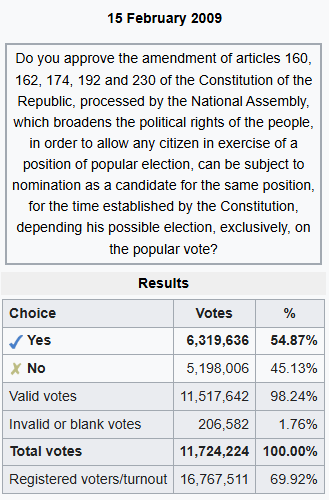
베네수엘라. 대통령 임기. 2009년 국민투표로 '연임 제한' 폐지. 찬성 54.9, 반대 45.1 로 헌법 개정.
1. 2009년 국민투표
베네수엘라 대통령 임기는 6년이다. 1회 추가로 연임은 가능했던 '구' 헌법 230조를 수정했다. 구 헌법 203조에 따르면 대통령 삼선 이상은 불가능했지만, 2009년 국민 투표로 '연임 제한'이 폐지되었다. 631만 표 찬성 (54.9%), 519만 표 반대 (45.1%)로 헌법 230조가 개정됨.
참고. 구 헌법 230조. "대통령 임기는 6년이다. 베네수엘라 대통령은 오직 1회에 한해 재선될 것이다"
국민투표를 통해서 "오직 1회에 한해 immediately once only"조항을 삭제함.
2. 차베스 개헌 시도 역사.
2007년 겨울, 차베스는 개헌을 통해 대통령 임기 제한 철폐를 시도했으나, 반대 51%, 찬성 49%로 부결되었다.
당시 개헌안에는, 대통령 임기를 현행 6년에서 7년으로, 연임 제한 폐지, 중앙은행 자율권 폐지, 노동시간 (1일 8시간에서 6시간으로 단축), 선거연령 18세에서 16세로 , 사회복지 대상을 비정규직으로 확대 등이 포함.
3. 2009년 국민투표에서는, 대통령 뿐만 아니라, 국회의원, 지역 시의원, 시장과 주지사 등도 '연임제한'을 폐지하자고 제안, ( 2007년과는 다른 점 )
4. 차베스가 대통령 연임제한를 폐지한 이유는, 명목상은 사회주의 혁명 완수를 위해.
5. 연임제한 폐지 반대자들, 카리스마 독재자 위험성 거론. '위대한 남자, 큰 형 big man ' 신드롬 위험성 비판.
6. 니콜라스 마두로 Nicolas Maduro 대선 결과.
(1) 2013. 4.14 베네수엘라 대통령 선거. 마두로 50.7%, Henrigque Capriles 엔리크 카프리스 49.1%
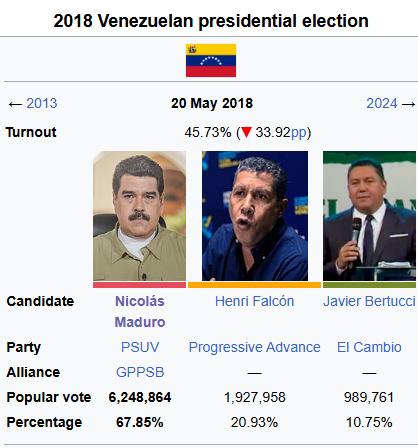
(2) 2018.May.20 대선 결과
마두로. 624만표 (67.9%)
Henri Falcon (192만표, 21%)
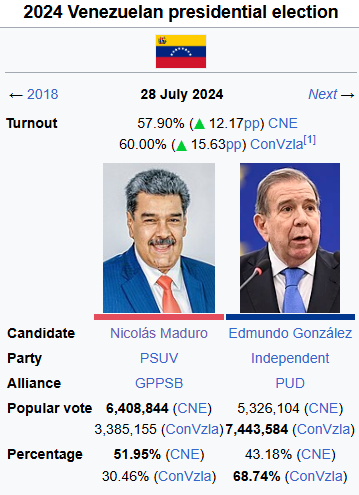
(3) 2024.july 28 대선.
마두로 (640만표) 52%
에드문도 곤잘레즈 (532만표 43%)
“The presidential term is six years. The President of the Republic may be re-elected, immediately and once only, for an additional term.”
(Older text — before the 2009 amendment)

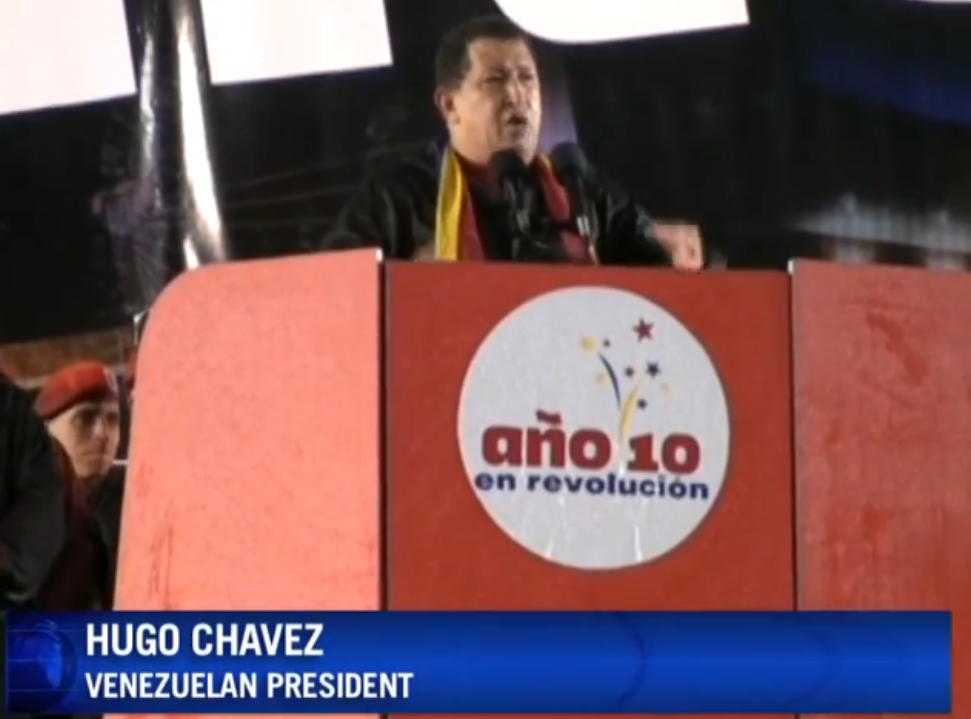
우고 차베스, 2009년 개헌 찬성

(개헌 반대론자)
가디언 보도.
Hugo Chávez wins referendum allowing indefinite re-election
This article is more than 16 years old
Electoral authorities say 54% of Venezuelan voters backed amendment abolishing term limits for elected officials
Rory Carroll in Caracas
Mon 16 Feb 2009 08.04 GMT
Venezuelans yesterday voted to abolish term limits for elected officials, boosting Hugo Chávez's ambition to rule the country for decades.
Electoral authorities said 54% of voters in the referendum backed a constitutional amendment allowing indefinite re-election, with 46% rejecting it – a margin of almost 1 million voters.
An exultant Chávez appeared on the balcony of the presidential palace in Caracas to address cheering supporters after the result was announced. "It is a clear victory for the people," he said. "It is a clear victory for the revolution."
The result will boost his effort to transform the Opec country into a socialist state and burnish his leadership of Latin America's "pink tide" of leftwing governments.
The president's mentor and ally Fidel Castro sent congratulations from his sickbed in Cuba.
The US made no immediate comment, but the Obama administration will be dismayed at the prospect of an emboldened foe in Caracas.
Chávez, a 54-year-old former tank commander, has been in power for a decade and plans to run for election again when his term ends in 2013. He has spoken of ruling beyond 2030.
However, plunging oil revenues are expected to hit the Venezuelan economy and the petro-fuelled Chavez diplomacy soon.
Some analysts predict stagflation and devaluation of the bolivar currency – the kind of grim cycle that undid previous Venezuelan leaders – and there was speculation that Chávez had rushed through the referendum before the crisis hit.
The unexpectedly wide margin of victory prompted rapturous celebrations among "chavistas", who credit their charismatic leader for poverty-alleviating social programmes, notably free health care and discounted food.
"We did it, we won – this is a great night," Freddy Ramirez, a 48-year-old security guard, said.
Fireworks lit up the night sky and cars filled with flag-waving supporters drove around the capital.
However, not everybody celebrated. "Chavez has screwed this country enough already," Ricardo Torres, a 56-year-old courier, said.
He blamed the president for crumbling infrastructure and high crime and inflation.
Voters had narrowly rejected a referendum to abolish presidential term limits in December 2007.
Chávez learned lessons from that defeat, this time widening the terms of the referendum to allow mayors and governors to run indefinitely, giving them an incentive to mobilise support.
The government's "red machine" waged a formidable campaign. Posters urging a "yes" vote saturated the country, state TV networks cheered for the "si" and civil servants were sent out to canvass.
A flyer gave 10 reasons for voting yes. Number one said: "Chávez loves us and love is repaid with love", and the second stated: "Chávez is incapable of doing us harm".
찬성 운동 (SI)
The opposition, a fragmented coalition of small political parties and university students, accepted defeat but complained that the government had hijacked state resources and hobbled the "no" campaign.
(반대 운동 진영. 소수 정당들, 대학생들)
"There was an abuse of power," David Smolanksy, a student leader, said.
Analysts said Venezuela's vote could embolden leaders in countries such as Bolivia, Colombia and Ecuador to seek indefinite re-election, a return of the "big man" syndrome of charismatic autocrats that marked much of the region's 20th-century history.
"Many who are worried about unlimited executive power will be dispirited by the results. The record of such indefinite re-election in the region has been very unhappy," Michael Shifter, of the Inter-American Dialogue thinktank, said.
At a news conference on Saturday, Chávez sought to allay such concerns and said staying in office for more than a decade was not unusual. He cited examples including the US president Franklin Roosevelt.
2. 2013. 4.14 베네수엘라 대통령 선거. 마두로 50.7%, Henrigque Capriles 엔리크 카프리스 49.1%
Chavez heir Maduro wins Venezuela presidential election
15 April 2013
Will Grant in Caracas: ''It's a questionable victory from the opposition's point of view''
Socialist Nicolas Maduro, hand-picked successor of the late leader Hugo Chavez, has won a narrow victory in Venezuela's presidential poll.
Mr Maduro won 50.7% of the vote against 49.1% for opposition candidate Henrique Capriles.
Mr Capriles has demanded a recount, saying Mr Maduro was now "even more loaded with illegitimacy".
He said there were more than 300,000 incidents from Sunday's poll that would need to be examined.
Announcing the results late on Sunday night, the National Electoral Council said they were "irreversible".
As the news emerged, celebrations erupted in the capital, Caracas, where Mr Maduro's jubilant supporters set off fireworks and blasted car horns. Opposition voters banged pots and pans in protest.
In a victory speech outside the presidential palace, Mr Maduro, wearing the colours of the Venezuelan flag, told crowds that the result was "just, legal and constitutional".
He said his election showed Hugo Chavez "continues to be invincible, that he continues to win battles''.
Mr Maduro said he had spoken to Mr Capriles on the phone, and that he would allow an audit of the election result.
He called for those who had not voted for him to "work together" for the country.
But Mr Maduro's margin of victory was far narrower than that achieved by Chavez at elections last October, when he beat Mr Capriles by more than 10%.
Almost immediately one member of the National Electoral Council who does not have government sympathies called on the authorities to carry out a recount by hand, a call later echoed by Mr Capriles himself.
At Mr Capriles' campaign headquarters the mood was sombre, as his supporters watched the results on television. Some cried, while others hung their heads in dismay,
Shortly afterwards, Mr Capriles emerged, angry and defiant.
"It is the government that has been defeated," he said. Then, addressing Mr Maduro directly, he said: "The biggest loser today is you. The people don't love you."
The new president faces an extremely complex task in office, says the BBC's Central America correspondent, Will Grant.
Venezuela has one of the highest rates of inflation in the region and crime rates have soared in recent years, particularly in Caracas. Food shortages and electricity blackouts are also common.
But perhaps Mr Maduro's biggest challenge will be trying to govern a country which is so deeply divided and polarised, and where the opposition say they have an increasingly legitimate stake in the decision-making process, our correspondent says.
The closeness of the race has also caused reflection inside Mr Maduro's own United Socialist Party (PSUV).
The man considered to be Mr Maduro's main rival, National Assembly President Diosdado Cabello, tweeted that the results "oblige us to make a profound self-criticism".
Mr Capriles has refused to accept the results
He is due to be sworn in on 19 April and serve until January 2019 to complete the six-year term that Mr Chavez would have begun in January.
Mr Chavez was a divisive leader. To his supporters he was the reforming president whose idiosyncratic brand of socialism defeated the political elite and gave hope to the poorest Venezuelans.
He effectively used his country's vast oil reserves to boost Venezuela's international clout, and his strident criticism of the US won him many political allies in Latin America.
However, his political opponents accused him of being an autocrat, intent on building a one-party state.
Henrigque Capriles 엔리크 카프리스 49.1%

2018.May.20 대선 결과
마두로. 624만표 (67.9%)
Henri Falcon (192만표, 21%)
2024.july 28 대선.
마두로 (640만표) 52%
에드문도 곤잘레즈 (532만표 43%)