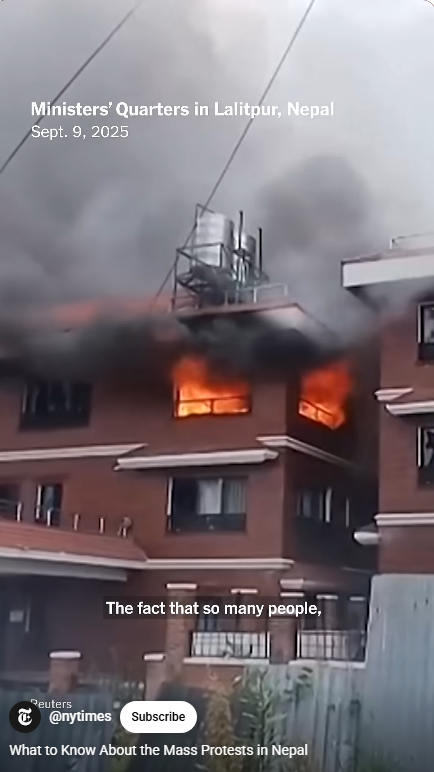
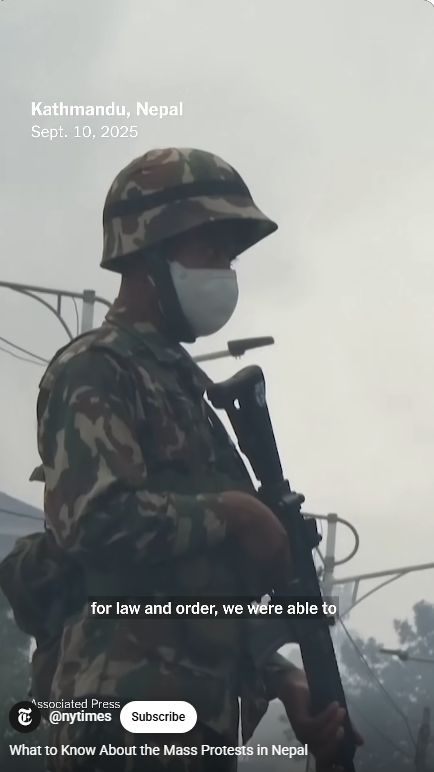
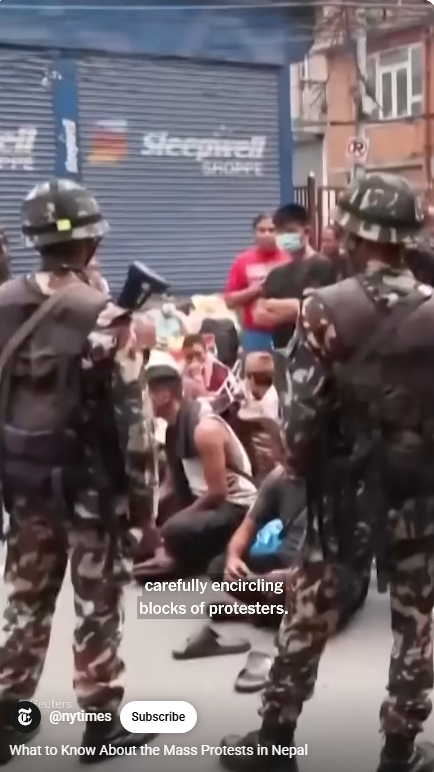
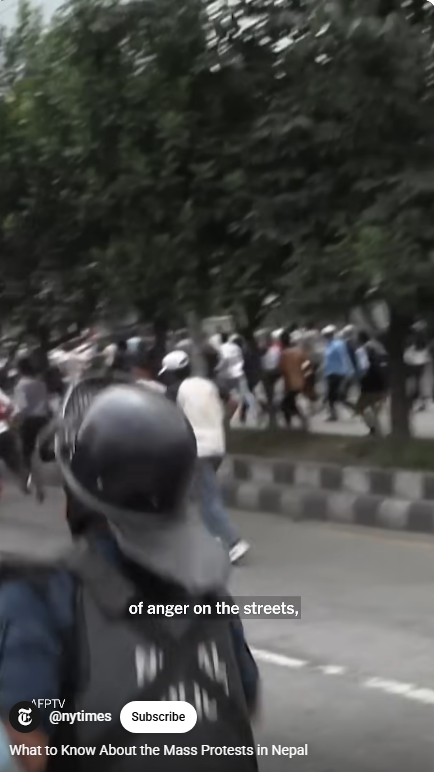
네팔 대규모 시위 원인. 네팔 부정부패 정권 축출, 올리 수상 사임. 네팔 청년들 불평등에 저항. 호화사치 '족벌 자녀'와 실업청년의 고단한 삶 대조. 탐욕 정치인 집과 의회 불태워버리다. 22명 사망. 샤마 올리 수상 축출
1.네팔 Z 청년들은 왜 의회와 정치인들의 집을 불태웠는가? 그 이면에는 화해불가능한 사회적 불평등이 있었다. 네팔 청년들은 고위직 관료, 정치인, 족벌 기업인의 자녀들의 호화로운 삶을 담은 동영상을 틱톡, 인스타그램에 게시했다. 이들을 가리켜 ‘족벌 아이들, 네포 키즈 Nepo Kids/Babies’라고 조롱했다. 네팔 청년들은 실업으로 고통받고 있고, 한국을 비롯 다른 나라에 일자리를 찾으러 강제이민을 가고 있는 상황에서, ‘네포 키즈’의 호화사치로운 생활은 10대 청년들의 분노를 자아냈다.
2. 강경 시위 촉발제. 26개 소셜 미디어 플랫폼 금지 및 탄압
이것과 더불어, 세금을 착복해 부정부패를 저지르는 탐욕 정치인들에 대한 네팔인들의 불만이 터졌다. 부정부패 추방운동을 벌이는 장소가 소셜 미디어, 틱톡, 인스타그램,페이스북이다. 그런데 2주 전에 샤마 올리(Oli) 총리가 26개 소셜 미디어의 사용을 금지하고 탄압했다.
3. 네팔 청년들의 시위 전개. 수도 카트만두에서 전역으로 번져나감.
9월 8일 Z 세대 네팔 청년들 카트만두에서 시위 시작됨, 카트만두, 포카라, 이타하리 등 네팔 주요도시 대학생들과 10대 학생들까지 동참. 시위대가 의회와 관공서 담을 넘을 때, 경찰과 충돌 200여명 부상당할 정도로 시위가 과격해짐.
9월 9일 화요일. 시위대 의회 건물과, '네팔 의회당(NCP)', 네팔 전 총리 '셔 데우바(Deuba)' 집에 방화 시작. 몇 정치인들의 주택이 공격당함.
4. 22명 사망자 발생과 올리 수상 사임.
9월 8일 네팔 전역에서 벌어진 시위에서 경찰의 탄압으로 19명 사망자 발생. 경찰은 물대포, 경찰 진압봉, 고무총탄 사용. 화요일 3명의 사망자가 발생.
9월 9일 화요일 사먀 올리 수상이 사임 발표. 네팔 장관들 중 일부는 해외로 도망쳤다.
4. 올리 수상 축출 이후, 누가 네팔 정부를 구성하며 이끌어 나갈 것인가, 아직 불투명
1) 현재 상황. 시위대 대표와 네팔군대간 협상 대화
네팔 국방부장관, 아쇽 식델 (Ashok Sigdel) 은 시위대를 비난.
2) 시위대는 정부의 책임과 개혁을 요구하고 있다. 만약 정부가 시위대의 정치적 요구들을 만족시키지 못할 경우, 네팔 시위는 더 격화될 수 있다.
3) 임시 총리로, 전 대법원장 수쉴라 카키 (Shushila Karki)가 거론되고 있다.
5. 가디언 지 보도. 네팔 시위 청년들 인터뷰.
피트 패티슨의 보도. (카트만두)
"이것은 우리의 혁명이다. 우리 차례이다. 네팔의 Z 세대 시위대는 부정부패 추방을 외쳤다" 부상당한 시위대 명단, 나이, 18세, 22세, 20세,18세, 23세. 사우라브 (부상당한 시위대 , 18세 학생) "정치인들이 탐욕만 부리면서 나를 팔아먹고 있다. 우리 청년들은 탐욕이 없다, 네팔인들의 좋은 삶을 위해 노력할 것이다"
What we know about Nepal anti-corruption protests as PM resigns
1 day ago
Phanindra DahalBBC Nepali, Kathmandu,Emily Atkinson andIftikhar Khan
0:31
Watch: Celebratory cheers and motorcycle horns in Nepal
Nepal's Prime Minister KP Sharma Oli has resigned in the wake of public outrage over the killing of 22 people in police clashes with anti-corruption protesters.
His office said he had stepped down to pave the way for a constitutional solution to the massive youth-led protests over widespread allegations of corruption and sparked by a social media ban, which has since been withdrawn.
The protests turned violent as thousands – many identifying themselves as Gen Z on placards and banners – took to the streets of Kathmandu on Monday.
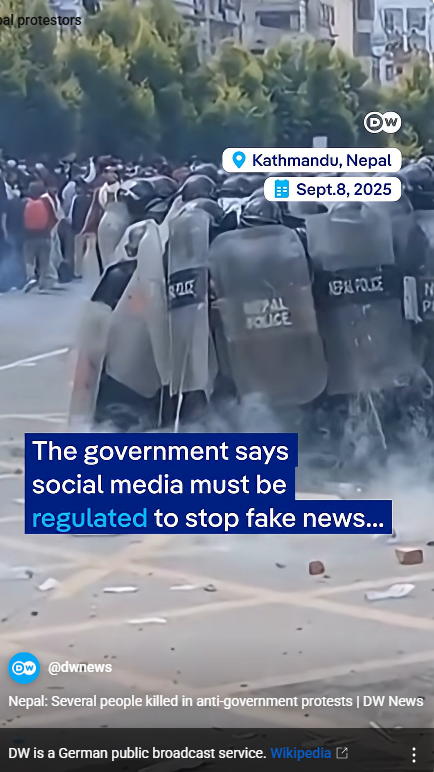
Almost 200 people are believed to have been injured in clashes with police, who used tear gas, water cannons and live bullets as protesters scaled the walls of the parliament and other official buildings.
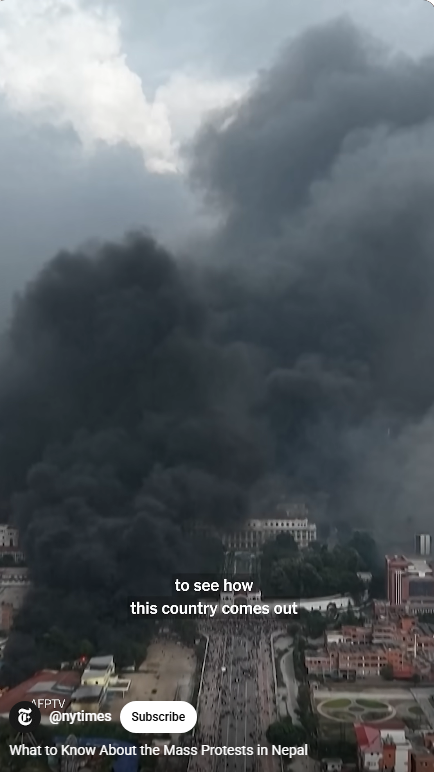
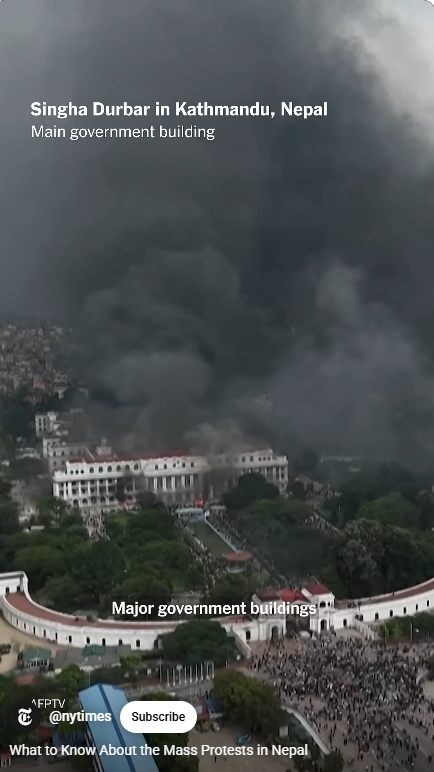
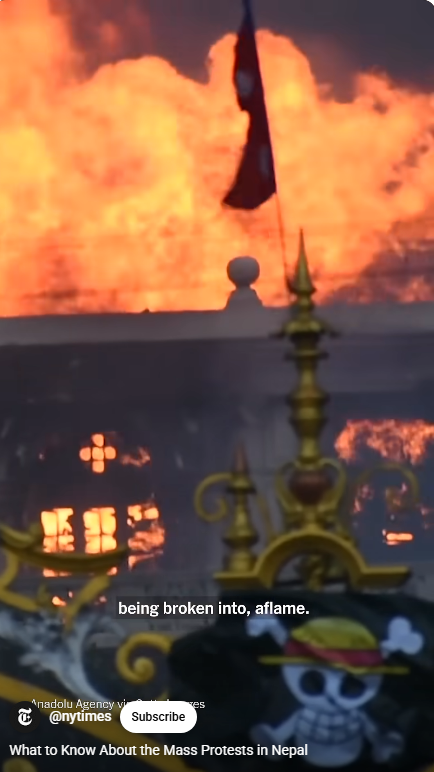
The protests continued on Tuesday, with demonstrators setting fire to the parliament building, the headquarters of the Nepali Congress Party and the home of former prime minister Sher Bahadur Deuba. The homes of several other politicians have also been vandalised.
Here's what we know about the protests.
AFP via Getty Images A police barricade is pictured in front of a fire set alight by demonstrators during a protest outside the Parliament in Kathmandu AFP via Getty Images
A police barricade is pictured in front of a fire started by demonstrators outside parliament
What was the social media ban?
Social media is a big part of Nepali life. Indeed, the country has one of South Asia's highest user rates per capita.
The demonstrations were triggered by the government's decision last week to ban 26 social media platforms, including WhatsApp, Instagram and Facebook, for failing to meet a deadline to register with Nepal's ministry of communication and information technology.
Critics accused the government of seeking to stifle an anti-corruption campaign with the ban, which was repealed on Monday night.
While the ban was a catalyst for the current unrest, protesters are also channelling a more deep-rooted dissatisfaction with the country's authorities.
What is happening across Nepal?
The ensuing demonstrations turned violent in Kathmandu and some other cities in Nepal, with 19 protesters dying in clashes with police on Monday.
Nepal's Minister for Communication Prithvi Subba told the BBC later that day that police had had to use force - which included water cannons, batons and firing rubber bullets.
Some protesters managed to breach the perimeter of the parliament building in Kathmandu, prompting police to impose a curfew around key government buildings and tighten security.
On Tuesday, protesters also set fire to parliament in the capital Kathmandu, sending thick black smoke billowing into the sky. Government buildings and the houses of political leaders were attacked around the country.
At least three people were reported to have been killed on Tuesday, bringing the total death toll to at least 22 since the unrest began.
Many of the injured have been taken to local hospitals where crowds have gathered. BBC Nepali spoke to doctors who said they had treated gunshot wounds and injuries from rubber bullets.
Police have said several officers were also wounded, with casualty figures expected to increase.
Who is calling the shots now?
On Tuesday evening, Nepal's army chief, General Ashok Raj Sigdel, issued a statement accusing demonstrators of taking advantage of the current crisis by damaging, looting and setting fire to public and private property.
If unrest continued, the statement said, "all security institutions, including the Nepal Army, are committed to taking control of the situation."
At the same time, Gen General Ashok Raj Sigdel invited protesters to engage in dialogue to find a solution to Nepal's worst unrest in decades.
It remains unclear, however, who is leading the country at this point.
The army's statement doesn't clarify what action it could take, or if it would use force to control the protesters. But they are already on the streets to exercise control over those "who are trying to take advantage from the adverse situation in the country and are involved in looting, arson and vandalism".
It's also unclear who will represent the protesters if they do engage in dialogue with the army. These protests have not been led by a group or a person, and in fact started as a response to a callout on social media platforms.
The one political figure who has openly supported the protest is the Mayor of Kathmandu Metropolitan city, Balen Shah. He has been making appeals for restraint from his social media account.
Protesters clash with police outside parliament in Kathmandu
Who is protesting?
Roused on social media and led by the nation's young people, this protest is unlike any seen before in Nepal.
The demonstrators identify as Gen Z, and the term has become a rallying symbol throughout the movement.
Although there has been no central point of leadership, a number of youth collectives have emerged as a mobilising force, issuing calls to action and sharing updates online.
Students from colleges and universities across Nepal's major cities - Kathmandu, Pokhara and Itahari - have been invited to join in uniform, books in hand, while videos circulating on social media show even schoolchildren participating in the marches.
Thousands of youth protesting against the social media ban
What are the protesters' demands?
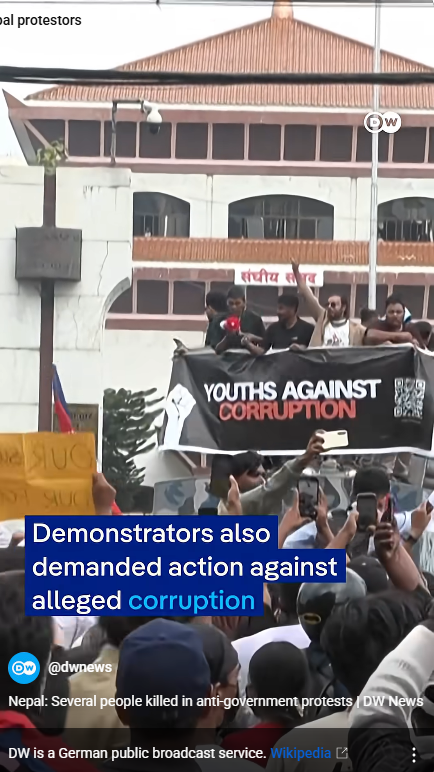
Their two main demands have been clear: the government lifting the ban on social media, which has now happened, and officials putting an end to what they call "corrupt practices".
Protesters, many of them college students, have linked the social media blockade with curtailing freedom of speech, and widespread allegations of corruption among politicians.
"We want to see an end to corruption in Nepal," Binu KC, a 19-year-old college student, told BBC Nepali. "Leaders promise one thing during elections but never deliver. They are the cause of so many problems." She added the social media ban had disrupted her education, limiting access to online classes and study resources.
숩하나 부다토키, 소셜미디어 창작자,
Subhana Budhathoki, a content creator, echoed the frustration: "Gen Z will not stop now. This protest is about more than just social media - it's about silencing our voices, and we won't let that happen."
What is the 'NepoKids' trend and how is it related to these protests?
A defining feature of the protest has been the widespread use of two slogans -#Nepo Baby and #Nepo Kids.
These two terms have gained popularity on social media in the past few weeks after a number of videos showing the lavish lifestyles of politicians and their families went viral in Nepal.
Protesters argue these individuals enjoy success and luxury without merit, living off public money while ordinary Nepalis struggle.
Viral videos on TikTok and Instagram have contrasted the lavish lifestyles of political families — involving designer clothes, foreign travel and luxury cars — with the harsh realities faced by young people, including unemployment and forced migration.
The slogans have become symbolic of a deeper frustration with inequality, as protesters compare the lives of the elite with those of everyday citizens.
What could happen next?
While the prime minister has stepped down, it's not clear who will replace him - or what happens next, with seemingly no-one in charge.
Some leaders, including ministers, have reportedly taken refuge with the security forces.
The protesters have so far largely defied an indefinite curfew in Kathmandu and beyond.
Protesters are calling for accountability and reforms in governance. However, if the government fails to engage meaningfully, analysts warn the unrest could escalate further, especially as students and civil society groups join in.
https://www.bbc.com/news/articles/crkj0lzlr3ro
Why GenZ has taken over the streets in Nepal
Protests in Nepal turned deadly after thousands of youngsters marched against the blocking of social media platforms.
www.bbc.com
가디언 기자 피트 패티슨의 보도. (카트만두)
"이것은 우리의 혁명이다. 우리 차례이다. 네팔의 Z 세대 시위대는 부정부패 추방을 외쳤다"
부상당한 시위대 명단, 나이, 18세, 22세, 20세,18세, 23세.
사우라브 (부상당한 시위대 , 18세 학생) "정치인들이 탐욕만 부리면서 나를 팔아먹고 있다. 우리 청년들은 탐욕이 없다, 네팔인들의 좋은 삶을 위해 노력할 것이다"
‘This is our revolution. It’s our turn now’: Nepal’s ‘gen Z protesters’ speak out against corruption
Young Nepalis led a mass protest in Kathmandu on Monday and have paid for it with bullet wounds or their lives
Pete Pattisson in Kathmandu
Wed 10 Sep 2025 13.32 BST
The whiteboard listing the names of patients at a hospital in central Kathmandu tells the story of a protest gone badly wrong. Beside each name is written their age: 18, 22, 20, 18, 23. The list goes on.
By Wednesday morning there were still scores of Nepal’s young being treated for gunshot wounds and injuries sustained when police opened fire on protesters in Kathmandu on Monday.
These are the so-called gen Z protesters, a generation of young Nepalis who led a mass protest against government corruption, nepotism and a ban on social media sites, and paid for it with bullet wounds and in some cases their lives. Hundreds were injured and at least 22 are believed to have died.
From his hospital bed, Saurav*, an 18-year-old college student, said he had been excited to join the protest. “When it comes to the nation, there is no need for motivation. The politicians are just selling our country for their own greed. That’s not supposed to happen,” he said.
The violence that broke out before the police opened fire on the huge crowds that had gathered outside the parliament building in Kathmandu on Monday was, insists Saurav, instigated by groups outside their anti-corruption movement.
As the shooting started, a protester standing in front of Saurav was shot in the chest and died on the spot, he said. Pellets from the shot hit his hand. “I was screaming in pain and my friends carried me to this hospital … It was totally unnecessary. Killing people, I don’t think that’s humanity. That’s just disgusting,” he said.
Young people shouting and raising their fists behind a ‘Youths against corruption’ banner
By Tuesday afternoon the prime minister, KP Sharma Oli, had resigned and thousands of Nepalis had taken to the streets to spontaneously celebrate his downfall and express their anger.
The mood initially was one of jubilation at what many saw as the end of widespread government corruption, and bitter resentment at the killing of the protesters the day before.
For the past 10 years, Nepal has been ruled by the same three elderly leaders – Oli, Sher Bahadur Deuba and Pushpa Kamal Dahal – who have effectively taken up the post of prime minister on a rotating basis. Between them, they have led the country on 12 separate occasions. While yesterday’s protests may have been triggered by the government’s ban on dozens of social media sites last week, it was built on years of frustration and anger at politicians who are widely viewed as corrupt and self-serving.
By 4pm the main roads into the heart of the city were packed with protesters, many on motorbikes, chanting, shouting and waving the Nepali flag, in defiance of a government curfew. Many more lined the streets, filming the moment and taking selfies, sensing that history was being made.
Much of the anger was directed at Oli, with handwritten signs scrawled on walls and T-shirts calling for him to be killed. “He killed our youth. He should be dead,” said one.
A protester writes: ‘We won’ on the parliament building on Tuesday.
View image in fullscreen
A protester writes: ‘We won’ on the parliament building on Tuesday. Photograph: Adnan Abidi/Reuters
The focus of the crowds was Singha Durbar, the complex of government ministries, which was then breached and much of it set on fire.
One group drove a police van out of the main gate, carrying dozens of triumphant protesters on its roof. Three young men scaled the ornate entrance gate to wave the national flag.
On the ground below, a group belted out the national anthem. A small number of soldiers stood by but did little to intervene. There was no sign of the police.
As thick, acrid smoke belched out across the streets and over the city, some protesters emerged from the burning buildings carrying reams of paper, office chairs and computer monitors.
“This is a revolution. This is the end of the corruption. It’s our turn now,” said Sujan Dahal, a young Nepali celebrating the downfall of the prime minister in Kathmandu on Tuesday.
“The government was so corrupt. They used that money to improve their own lives, but there has been no change in the lives of normal people.”
By the end of the day, the scale of destruction had shocked many Nepalis, amid a sense that the movement has been sabotaged by groups seemingly bent on retribution and violence.
“I’m feeling bad. This is not good for us,” said a young man, who did not want to give his name. Along with government ministries and residences, dozens of other properties have been set on fire across the city, including a luxury hotel and a prestigious private school.
Young man in hospital bed with bandaged head and arm
Suman Rai, 20, being treated in hospital after he was shot by rubber bullets during the protests. Photograph: Navesh Chitrakar/Reuters
Throughout the day, groups of protesters had formed human chains around some sites to protect them, including the entrance to an army camp. “We are protecting the army. We are not against the army. We are against the government. The corruption. They are trying to shut our voices by stopping social media. Today we won. It is our victory. Oli has resigned,” said Sajad Ansari, 20.
By Wednesday morning, the administrative heart of Kathmandu looked like the aftermath of a missile attack. Burnt-out buildings stood smouldering in the light rain. The charred shells of cars and motorbikes lay strewn across the streets. Plumes of dark smoke still rose over the city.
The city is now in a state of almost complete lockdown, with soldiers stationed at major junctions enforcing a strict curfew. It is unclear what shape a future government might take.
It is a sentiment shared by Saurav even as he recovers from his injuries but, like many, he remains optimistic. “If the power is in the right hands, of course Nepal will develop,” he said. “Our young generation are very capable. We don’t seek for our own greed. We think about the good of the nation.”
https://www.theguardian.com/world/2025/sep/10/nepal-gen-z-protests-corruption
‘This is our revolution. It’s our turn now’: Nepal’s ‘gen Z protesters’ speak out against corruption
Young Nepalis led a mass protest in Kathmandu on Monday and have paid for it with bullet wounds or their lives
www.theguardian.com
DW 도이치 벨레 보도.





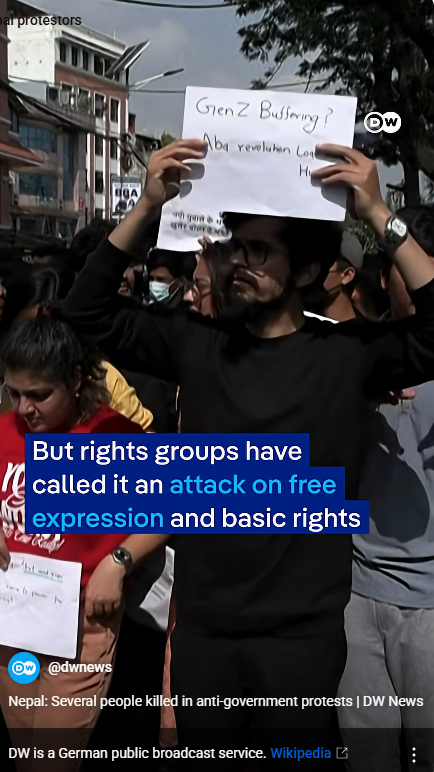
뉴욕타임즈 보도 NY times


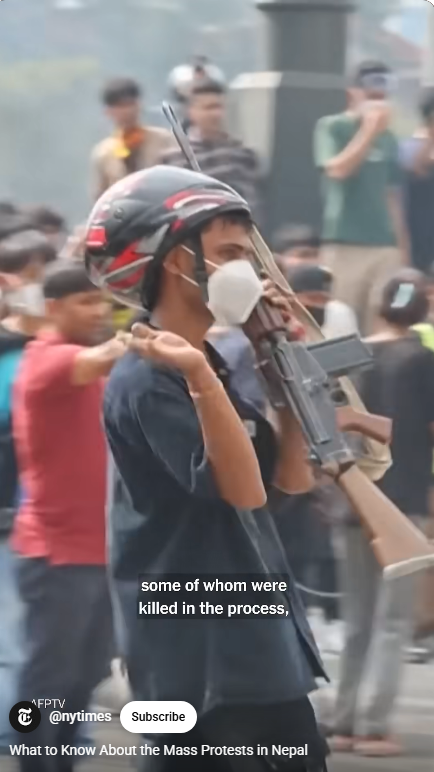
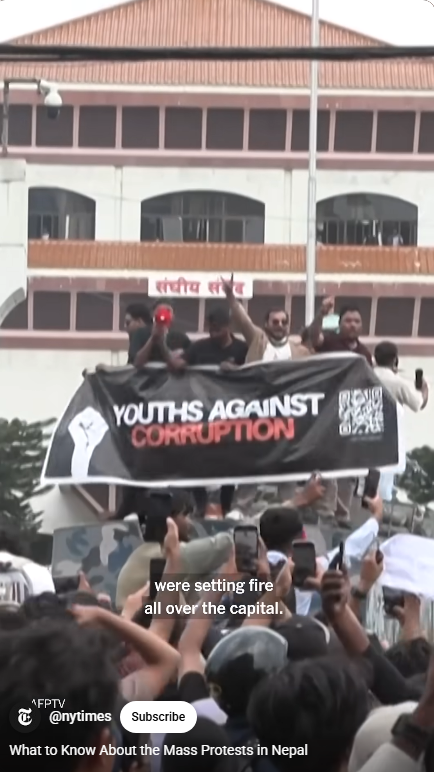
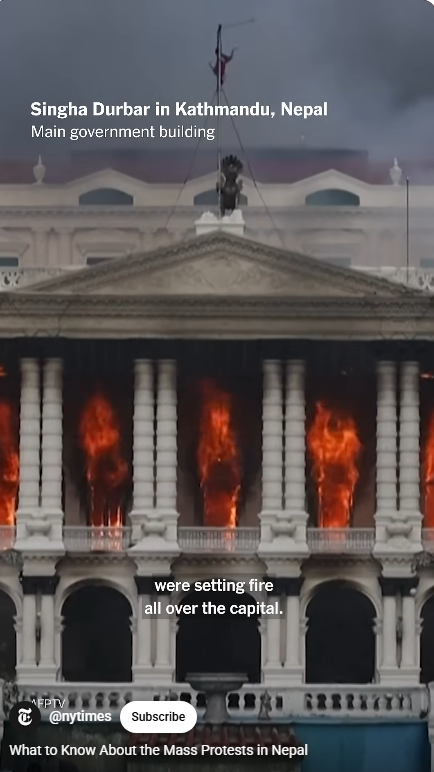
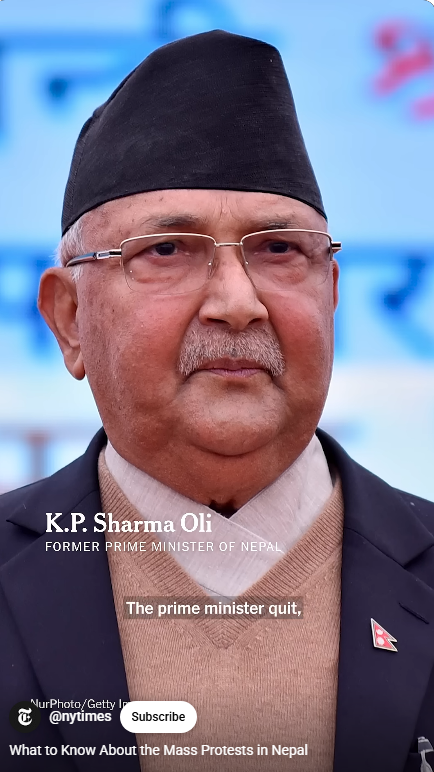
축출당한 샤마 올리, 전 네팔 수상
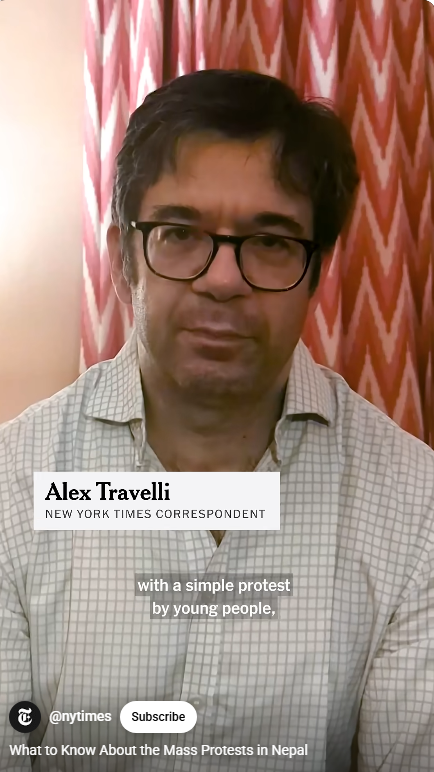
알렉스 트라벨리 , 뉴욕 타임즈 기자.


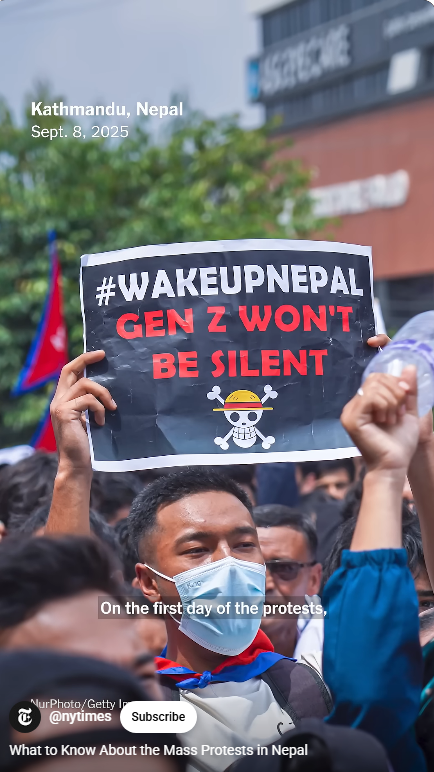
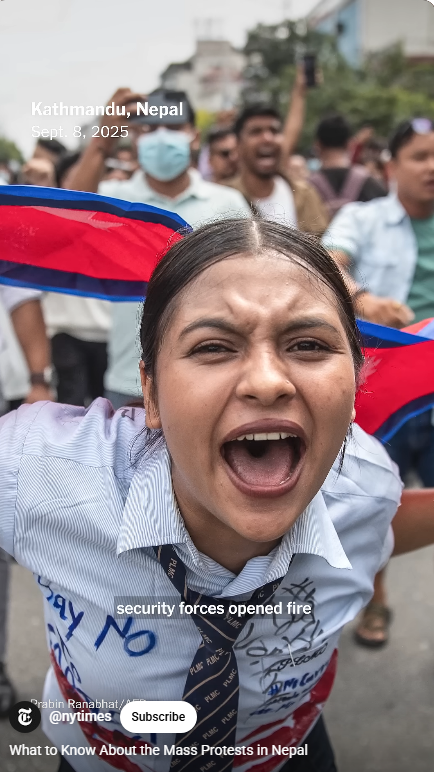
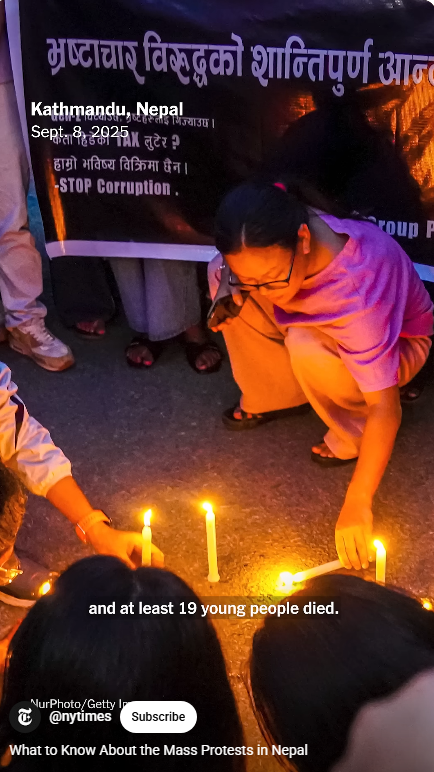
네팔 시위자 최소 19명 사망.
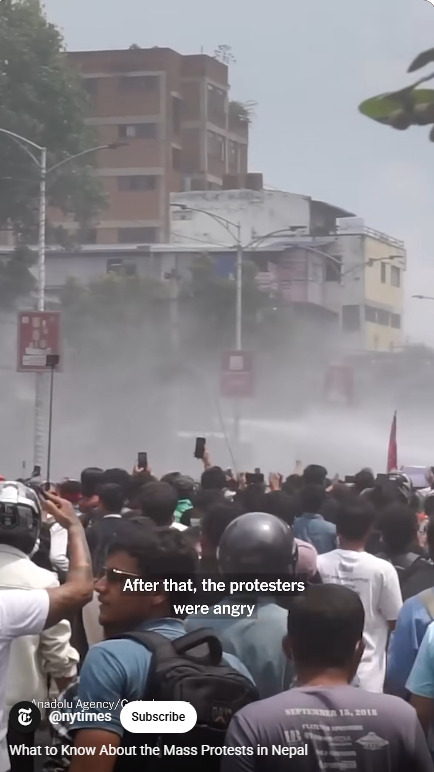
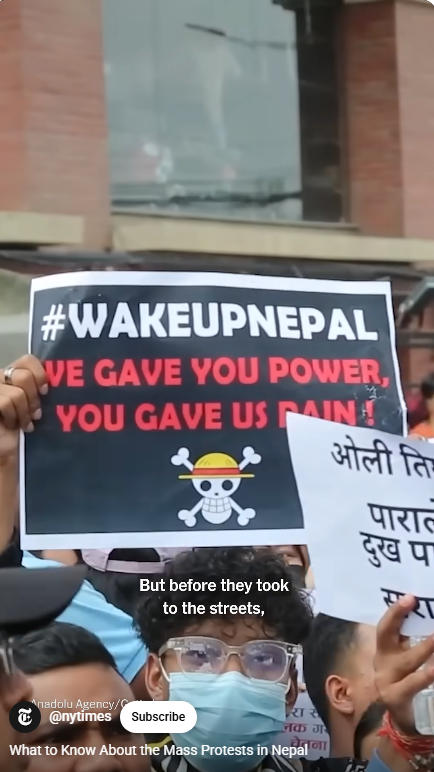
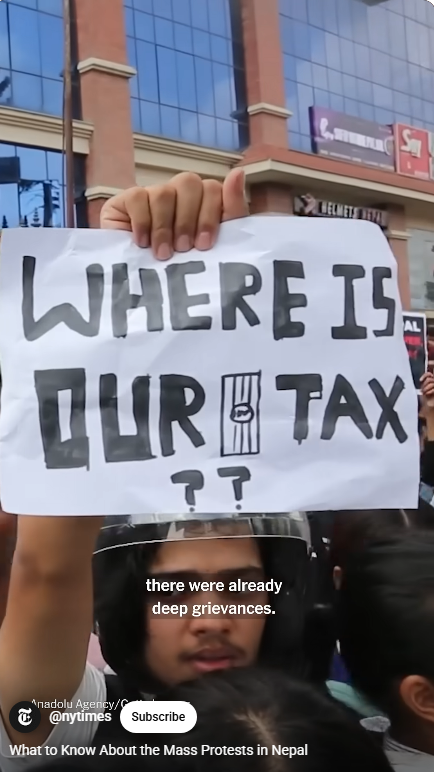
네팔 부정부패 정치인들을 비판하는 네팔 청년들, "우리 세금이 어디로 갔는가?"


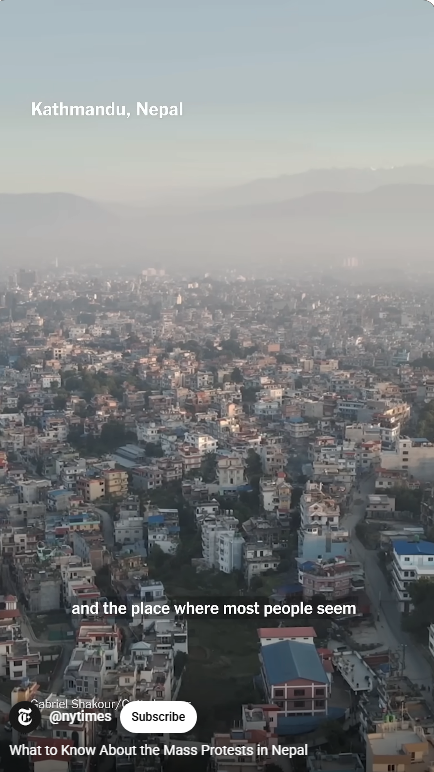
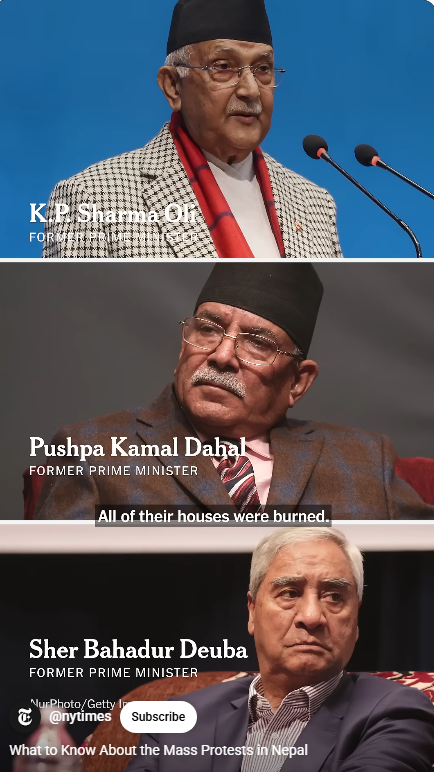
샤마 올리 (Sharma Oli), 푸쉬파 다할 (Pushpa Kamal Dahal), 셔 데우바(SHer Bahadur Deuba) 전 네팔 총리